Author’s Afternoon

Giving a first-ever public talk on your book is an experience not totally unlike being present at your child’s birth and getting asked to cut the chord. How do you know you won’t hurt the baby? Sure, they tell you everything’s going to be fine but … That’s your baby.

And today’s the day. The public library in my town is opening up just so I can discuss my book, City ofWoe. They are spending money to hear me speak, so I have to be good or I may never be able to borrow a book again. And local people are supposedly coming, so I have to be good or I won’t be able to look them in the eye when I am out buying milk or cheap bourbon. If I stink up they joint, people will give me the “you should probably buy some lottery tickets too, you ain’t making no money writing” look.

So, welcome Pressure. Nice to see you again. How’s the family?

The really odd thing about giving a first-ever book talk is there is no way to really know what I am doing. Sure, I can fake it (yep, that’s the main thrust of the plan), mimicking what I have seen “real writers” do when they give talks. I saw Richard Price give a reading two times; for me, it was like seeing the Beatles, then the Rolling Stones. I can do what he did. Except he’d already done hundreds of these (in my mind any way), he was a Pro, An Established, Beloved Writer. I’m just a schmo starting his dream, talking at his local library; what do I have to say?

Lots, actually, and that is the beautiful, awkward truth about all of us. We write because we have lots to say, and deep down, if we are really truthful with ourselves, we want to talk about it. That’s why we started writing in the first place, because we had so much to say.

So what should a writer do at a reading or book talk? I am not An Established, Beloved Writer, yet, but here are a few tips:

* Respect the venue. With the possible exception of a firing squad, any place that will have you should be considered sacred.

* Bring a gift. Cookies, a signed copy of the book, something to show that you appreciate the opportunity.

* Open with gratitude. A simple thank you can help break the ice and set an inviting tone. “Thank you for having me.” “Thank you for coming.” Won’t hurt and doesn’t cost a penny.

* Open with a reading, and introduce it briefly. Write down the introduction. Practice both the introduction and reading, out loud, to smooth it out. Try not to get caught up in perfection, just smooth enough to engage.

*In selecting the reading, ask yourself what gives your book the best chance to appeal to readers without giving away key plot points. Keep the selection to a few pages at most. Less is more, you don’t want to bore.

* Read at a comfortable pace without melodrama. Speak up but don’t feel obligated to scream. In preparation, read and speak everything you plan to do at least once, just as a test run. Make note of phrases you stumble over, and say them a few times. The current bane of my existence is “He picked up a Fruit Roll Up wrapper one of the kids left…” No reason why I keep stumbling on it, but I do. Okay. And if it happens during the reading, I will survive. That is one of the benefits of rehearsal; knowing the challenges.

* Also, remember, nothing is the end of the world. If you stumble on a word, correct and continue. People have noticed you are human; they understand. Don’t make yourself crazy. If they have come to see you, you have already won them over. These are your people. Enjoy!

* What to discuss? Depends on the venue. If you are at a writer’s convention, writers will be attending, so teach them something. I once saw David Morrell, author of many novels including First Blood, the basis for the Rambo movies. He discussed the challenge he set for himself with that book to see if he could write a novel that was almost entirely chase scene. It was a fascinating lecture. And as I mentioned earlier, I saw Richard Price speak. That guy was so calm and unassuming and open in discussing what his intentions were with the book he was presenting (Clockers one time, Lush Life another, if memory serves), that people embraced him like family.

* How long to speak? Between “What a waste! He barely said anything!” and “Oh My God, he wouldn’t shut up.” I am shooting for around 15 minutes, not including the reading, so about 20 minutes or so total.

* And then what? Offer to answer questions. This allows the audience to lengthen the event a bit if they want (if this gets long and/or tedious, you can end at any time with the magic words, “Thanks again for coming out.”).

* What next? Usually there is a signing. Bring books commensurate with your popularity as a writer. This is difficult to judge when you are starting out and acting as an army of one, but bringing more than you think you will need and stashing them under the table so it looks like you only brought a proper amount works well. I usually display a few, have a small pile nearby, and a box under the table in case there’s a sudden mad dash, which happened once and was delightful.

The public reading experience can be wonderful and is always a lesson. Believe in your work, embrace the opportunity, and share your passion.

Here’s hoping this was helpful.

Christopher Ryan is author of City of Woe, available on Kindle and Nook, and in print. For more info, click here.

Posted in America, comics, digital publishing, ebook publishing, fiction, film, independent publishing, pop culture, self-publishing, writing | Tagged , , , , , | 1 Comment

Because They Were Kids

Everything changed on Friday. We didn’t want it to, didn’t plan for it, ask for it, or welcome it. And yes, this wasn’t the first tragic shooting of random Americans. We’ve already seen shootings at a high school, mall, a college campus, and movie theatre. They were all tragic. This was different because they were kids.

Little kids. Twenty of them. Missing teeth. Carrying around Magic Markers. Wearing a dress that was supposed to be a Christmas present, but was sooooooo exciting it had to be worn sooner. Playing baseball in the front yard with Dad. Worshipping Victor Cruz. We need to remember all this and more about them because they were kids.

This guy, mentally troubled, of course, with access to guns, of course, went out of his way to kill these kids and their teachers and their administrators. After he had already killed his mother.That was not enough for whatever was inside him. He loaded up his now dead mother’s car with guns and several 30-bullet clips, and drove to the school, but found it locked. That wasn’t enough to dissuade him, give him a moment of clarity. Instead he shot his way in. Shot the principal and school psychologist, and then walked to specific classrooms and shot six and seven year olds. Shot them as many as eleven times. is there anyone in America who can justify a six-year-old being riddled with eleven bullets? The administrators and teachers are a horrible loss, tragedies each, but this becomes different, this changes all of us, because they were kids.

Some in America do not want to talk about this, hiding behind “a call for waiting until people have had time to mourn.” We’ve already mourned – after the mall, and the college, and the movie theatre. Some say we cannot discuss it as a gun problem because of the second amendment. The Founding Fathers didn’t write the second amendment to protect mentally troubled isolated white males wanting to make a statement by shooting up malls and colleges and movie theaters and elementary schools. These guys are violating the spirit of the second amendment, not upholding it, so, yes, we can discuss the function of the second amendment, because they were kids.

Others in America want to point to Hollywood and video games and our violent culture. Fine, let’s study it all and make some changes that serve the second amendment and the first amendment to better serve the spirit the Founding Fathers intended. Let’s strip away all the methods used to twist those amendments and mutate them in the name of profits, because they were kids.

And then there is the mental health issue. There can be no denying that we are not doing enough. Just look at the shooters. They look like Batman’s rogues gallery. Case closed. There has to be ways we as a national community can do more to de-stigmatize getting mental health help, embracing services available. There has to be a way for us to be more vigilant regarding these people’s needs. If we see something is off we have to say something is off, because this time they were kids.

Some say we won’t get anywhere with the NRA and gun lobby. We have to convince them we aren’t against their existence, we just need their help. Perhaps making it profitable for them to work with us is the answer. Maybe some kind of tax incentive can be fashioned when gun sellers and shooting range owners, etc., can write off the loss of sale for every customer that doesn’t pass some agreed upon background check. Pie in the sky? Maybe. But we have to make the effort, we have to fundamentally change our culture to better support the true spirit of the Founding Fathers’ intent. And we have to do it now because this time it was kids.

Posted in America, fiction, film, husband, kids, love, marriage, parenting, politics, pop culture, sons, teaching, teenagers, wife, writing | Tagged , , , , , | 1 Comment

On Writing: Getting Back on The Horse

So I’ve been away. Well, not away, but not writing. And the weirdest thing happened; I got crushed with guilt. Crushed.

I wound up with such a weight on my shoulders, and it got worse with each passing day. You can call it blocked, you can call it guilt, but here’s the truth: it is just a waste of time.

Nothing gets accomplished feeling guilty, or blocked, or worthless. You know what should happen if you miss a few days of writing? Nothing. No penalty, no shame, no guilt. Just sit down and write.

The other thing that happened to me was I became overwhelmed with choices. What should I write? Which idea first?

Just. Sit. Down. And. Write.

Does it matter which idea we write about first? No. Just as long as we’re putting it out there, communicating, connecting.

And don’t worry about length. Just write.

Get back on the horse.

Feels good to be back in the saddle….

Christopher Ryan is author of City of Woe, available on Kindle and Nook, and in print. For more info, click here.
Posted in America, digital publishing, ebook publishing, fiction, husband, independent publishing, kids, love, marriage, parenting, pop culture, self-publishing, sons, teaching, teenagers, wife, writing | Tagged , , , , | Leave a comment

On Writing: Q&A With NJ-Based Syndicated Journalist and Reviewer – Jacqueline Cutler

Chances are you’ve come across the name Jacqueline Cutler at some point. A syndicated journalist covering New York and New Jersey, when she’s not reviewing books she’s writing about National TV and Broadway. After learning that she began her career as a New York City crime reporter (like me), I reached out with a few questions to learn more about her crime days, her family, and her work today. Follow her on Twitter @TMSJackCut.

1. Please tell us a little bit about your own writing career. You started out as a crime reporter like myself. Where was your beat? How did that experience affect you? What brought you from there to where you are today?

I began by covering cops for Manhattan community weeklies – the Westsider, the Chelsea Clinton News and East Side Express. It was the spring of ‘79, and the city was dangerous, making it a great beat. I was paid 70-cents a column inch, and covered some horrific stories.

My last story on the beat was the murder of John Lennon. I was a hard news reporter for many years, covering town halls, a state capitol, different cities, politics and education. I worked in NYC, Chicago, Greenwich and Hartford, Conn., and Oakland, Calif., before returning East 15 years ago and making my home in New Jersey with my husband, two children, two rescue dogs and way too many books.

2. What are your journalistic goals?

I wish they were loftier, but they are usually about meeting the next deadline.

3. How do you find the time for creative writing pursuits in between your career and raising a family?

My own writing is forever pushed to the back burner. I have been swearing to myself that I will reserve an hour a day for fiction and rarely make it happen. I cover television on a national basis for a syndicate, and my main job is writing features stories for TV books. I also write for the syndicate’s website, and am our NYC theater critic, and write for the group’s magazines, in addition to the column about NJ writers. I am [also] the mom of two teenagers.

4. Does being a New Jersey author help or hurt those goals? In other words, does it matter where a writer lives today, career wise?

As a journalist, I think it depends what you are covering as to where you need to live. New Jersey is such a rich, diverse state that it’s a treasure trove for writers. And for fiction, I am guessing you could work most places.

5. What do you see as the challenges facing new authors today?

Getting paid, and making your voice hard above the din.

6. How does your column, New Jersey Authors, address those challenges?

I try very hard to find writers who are from, living in or were educated in New Jersey. As long as it is not a self-published book, I can consider it. I wish that I could give space to every book, but that is just not possible.

Christopher Ryan is author of City of Woe, available on Kindle and Nook, and in print. For more info, click here.

Posted in Uncategorized | Tagged , , | Leave a comment

On Writing: Embracing Your Genre

A long, long time ago, in a galaxy right across the Hudson River, I took a screenwriting course that offered up sage cliches, formatting rules, and pacing maxims that collective attempted to pass themselves off as innovative screenwriting vision.

Despite this, I learned some valuable lessons.

One I want to share today is the idea of learning your genre. Writers must do this whether they be of the novel, screen, television, or stage variety. Even comics have to “know what’s out there.” And while I embrace the idea of learning your genre, I caution that it can lead to neurosis, an addiction to collecting all authors i your area, and an avalanche of reading that swallows whole your writing time.

So, our first lesson today is …Study, Don’t Obsess.

Yes, read your genre, but as part of your writing life, not all of it. But, with a bazillion books out there and a gazillion more on the way, how do we choose? I suggest two rules for what to read:

1) Read The Kings – meaning, read the best sellers in your genres, at least one by each leading author. From there, read at least one more by those Kings who resonate with you.

2) Read What Calls to You – meaning, visit bookstores (hurry, before they’re all reduced to websites or kiosks), find your genre, and peruse. Here we need to fight obsession and addiction (always remembering to budget both our money and our time, lest we wind up broke with a house full of books, and the producers of Hoarders at our door), but allow instinct to bring us what we need. I’ve made some of my greatest reading discoveries doing this. You will too.

Then, two more rules:

3) Read what you’ve purchased or borrowed for pleasure. This is a must. Reading for pleasure is what brought us to the dance, fired up our imaginations, and fueled our souls; if we sacrifice this pleasure and make reading all about studying the form, and working, we will wither as creative forces, and, I believe, our writing suffers. We must retain joy, or all of this is moot.

4) After reading, even days later, reflect on the books you liked, and ask yourself how the authors delivered the experience you enjoyed. If you know, make note of it and we’ll discuss what to do with it later. If you do not know, and if the book still lives for you, reread it consciously looking for when the author out the rabbit in the hat. What impressed you? Pace? What was done to control it? Make notes, even I. The markings, or by using ereader note taking options. And by this method our writing prowess grows.

Lastly, one you’ve noted how these authors make their work live and succeed, you need to reflect on the techniques used and how those techniques apply to your writing. Please notice that I did not use the word “compare”. That is authorial suicide, you are you, and they are successful because they have their own individual styles. But, like a young guitar player mimicking Eric Clapton, or Eddie Van Halen on the way to discovering their own style, so too, do we see how others do it, and fold that into our own style. What fits for us? How can we adjust what we do to get closer to our writing goals by using what we’ve learned from others?

I am not suggesting plagiarism, and personally have not re typed other authors to “see what it felt like” to write that book (Hunter S. Thompson famously did this with Hemingway’s work, but observe how different his style became), but I do believe in gushing over Elmore Leonard’s dialogue, Stephen King’s use of the common place to anchor his shocks, J.K. Rowlings’ sense of wonder elevating the YA genre beyond the previously conceived limits of that genre. This is how we learn from what is out there.

Sometimes, however, the answer is more negative. And that is great, too. One of those screenwriting cliches was “Take a genre and study three classics and seven bombs.” This is a gem of advice. Reading a book you hate teaches you more than reading a classic. Why doesn’t it work? What do you hate? Why? The lessons are numerous, and clear, and can benefit our writing as much or more than visiting with the Kings.

As always, I hope this helps.

Christopher Ryan is author of City of Woe, available on Kindle and Nook, and in print. For more info, click here.

Posted in America, comics, digital publishing, ebook publishing, fiction, film, independent publishing, pop culture, self-publishing, teaching, writing | Tagged , , , , , , , , , | 2 Comments

On Writing: What to Do When You’re Overwhelmed

Morning comes in the middle of the night way too often for me these days, and I know why.

I’m overwhelmed.

This morning, my “To Do” list included grading 150 college app essays, 40 reaction papers, 100 timed essays, answer 30 emails, write the video script to promote the new album, blog to build a platform to sell a novel I proudly believe can stand on its own, write lesson plans, finish tweaking the rough cut of the Indy film I shot two summers ago, learn to utilize octal media better, yada, yada, yada.

So yeah, I stared off, freaking out.

Truth is, that doesn’t help anything. Here’s one thing that I find does help, and maybe it will help you.

When I am overwhelmed, first thing I make myself do is breathe. You should too. Most important, calm yourself and take stock. Then do the following:

1) Is there anything that can wait? If so, put them to somewhere out of your immediate eye line, giving yourself a date to get back to them.

2) Next, from the work that remains, what is absolutely due yesterday? Put these items in a pile close to you.

3) Is there anything left? Put it all in a pile we’ll call “first thing tomorrow.” Guess when we’ll see them next?

4) Now take that pile nearest you. Let’s take a look. Which is the shortest project, the one that is closest to being done? That becomes Job One today. Why? It will be done quickest, giving you a win. What’s the next smallest job? And so on.

5) be realistic. What can realistically get done in the time you actually have? Be honest with yourself. Don’t over-estimate, don’t rationalize. What can actually get done? Once you have a real picture, do one more thing…

6) Make a deal with yourself. Set the bar; today I will definitely get two jobs done. If I get the third done, my reward will be such and such, but if I get four done, then I will treat myself to this and that instead of such and such. Make sure both potential rewards are worth working to achieve … and affordable to your budget.

7) Then get to work.

I sincerely hope this helps.

Christopher Ryan is author of City of Woe, available on Kindle and Nook, and in print. For more info, click here.

Posted in America, comics, digital publishing, ebook publishing, fiction, film, independent publishing, pop culture, self-publishing, teaching, wife | Tagged , , , | 2 Comments

On Writing: What I Learned at My First Book Fair

The thing about self-publishing is eventually you have to sell what you write. And while the digital book world continues to grow, I keep finding people who only want to read my book in print. As I have committed to the learning experience of being a self-publisher, this is an avenue I feel compelled to explore, and it has lead me to … the book fair.

My experience was at the Collingswood Book Festival 2012, an event held annually in Collingswood, NJ.

Full disclosure, my experience is a total of one book fair, so expertise? Not so much.

But I learned a lot of practical information from this initial foray and want to share these dozen lessons with you.

1) Carefully read what is being offered. I expected a few things to be provided, and what I had actually purchased with my very affordable $30 participation fee was a 10′ by 10′ space in the street. When I reread the agreement, it was all spelled out clearly. Any false expectations were my fault. So …

2) Bring a table, chair, and, if the event is outside, a booth tent. The latter has a metal frame that opens and collapses easily. Every other seller at the fair will have one, and the sun will shine brightly on you all day if you do not, or will send rain clouds to ruin your books. It was the former for me, and I didn’t even …

3) Bring sunblock. You. The sun. All day. Bring protection. And also bring…

4) Clear packaging tape. Use it to tape your signs up, your table cloth down, and to secure whatever else needs securing. It looks better than black electrical tape, trust me. How do I know? Don’t ask. While we are discussing necessary materials, also bring …

5) Pens, or some other kind of writing utensil, in case people want you to sign the books they buy. Hey, you hit the big time! Sort of. Which calls to mind another crucial requirement: bring…

6) Realistic expectations. Have enough copies of your work to be prepared for a robust day of literary commerce, but prepare yourself for … not so many sales. People don’t know you yet, and it is difficult for them to commit to a stranger’s book, especially if he is staring at them or she is giving the hard sell. Welcome them to check the book out, but also give them some room. I placed my books at the right end of the table (closest to them as they passed in the traffic flow) and sat a little left of center to provide a bit space without ignoring. I found a simple “good morning” to all was welcoming but not intimidating. Another good is idea is to …

7) Print up flyers about your book. I printed up a couple of articles on the book, which garnered some attention, but not nearly as much as printed versions of the Amazon.com reviews. Those left with potential customers at a three-to-one margin. And if you do offer flyers, bring something cool to hold them down. I used a piece of counter top left over from a bathroom remodeling. It garnered several compliments, which was nice, but not as crucial as remembering to bring…

8) A lunch box, with water, snacks, whatever you need to sustain yourself over several hours especially if you don’t ….

9) Bring a friend, partner, or fellow published author. This person will help staff the table, especially during bathroom breaks, can help handout flyers, attract potential buyers, and keep things going. But if you do partner up, and want to go see what else is going on, remember…

10) You are there to sell your book, not buy twenty other books from people. Lots of writers are also book junkies, so … Beware. Don’t spend more money than you make. Instead, use that leg stretching to …

11) See what the competition is doing, how their booths look compared to yours, and where the action is. You may find that your booth is not situated for optimum sales. Don’t beat yourself up, you didn’t know. And don’t blame them, you didn’t ask. What you should do when you book these events is request to be put as close to the main book sales action as possible.

12) Don’t freak out if one booth has an exceptionally long line. Investigate if you can. Most often you will discover the writer at that booth is actually a local celebrity like a goalie for the nearest NHL hockey team, or a reality TV star. These people are not your competition.

Bonus:

13) if you do run across your competition, someone in the same genre as you who is doing better business, don’t get mad, get educated. Assess what this person is doing. It may be as simple as she or he has eight books out and you have one. You know the solution there. It may be a bigger booth, advertising, cookie give always, who knows? Observe. Assess. Adapt.

I hope these lessons help should you consider participating in a book fair. Is it a cost-effective endeavor? I broke even financially, but experienced making sales (very fun), learned a lot about how something like this works, met and learned from other self-publishers, and made a key contact I hope will pay off soon. As a result, I count this as a profitable experience, if not a get rich quick strategy. For someone who tends to stay home and write, this was a big step forward. Whether it proves to be a steady component of my business remains to be seen.

Christopher Ryan is author of City of Woe, available on Kindle and Nook, and in print. For more info, click here.

Posted in America, digital publishing, ebook publishing, fiction, independent publishing, self-publishing, writing | Tagged , , , , , , , , | 4 Comments

On Writing: Making it through The Monster of Daily Life

Where have I been? Away from my blog for too long, and I woke up wondering what could have kept me away.

Life.

By that I mean wife, sons, death of friends, work, grading papers, writing lesson plans, orienting to a new school year, promoting a novel, reviewing film and writing copious notes as part of post-production, planning a promotional video for a band I’m in. Movies. The NFL. Presidential campaign lunacy —

None of this is an acceptable excuse, if I am to be completely honest. Not for me. Not for you.

Writing isn’t something we do instead of living our lives. Writing is an integral part of our lives. We shouldn’t decide whether to write or do one of the activities listed above; we should write as part of them.

Blog with a nice cup of (insert addiction here). Write commentary to the politics of the day while watching the shows you’ve recorded. Vow to watch less of them, especially the repeats. Write while ignoring the commercials during that football game you can’t miss. Write in the early hours when no one is up and you shouldn’t be, either. Write in those wind-down minutes in bed before sleep takes you.

The mistake we make is deciding when we have time to write. If we write during the time we spend thinking of when we can write, the problem won’t exist. Don’t procrastinate, write about procrastination.

Does it sound unrealistic? Really? I just wrote this blog while waiting for my tea to boil. Short, sweet, and offering up a valid point I needed to see, and I hope you did, too.

And so my writing gap is over, my procrastination ended, my blog revived, my writing live renewed. We begin again. we keep calm, write on, and life is a little more worth living.

Your turn.

Christopher Ryan is author of City of Woe, available on Kindle and Nook, and in print. For more info, click here.

Posted in America, digital publishing, ebook publishing, fiction, film, husband, independent publishing, kids, love, marriage, parenting, politics, pop culture, self-publishing, sons, sports, super-heroes, teaching, teenagers | Tagged , , , , , , , , | Leave a comment

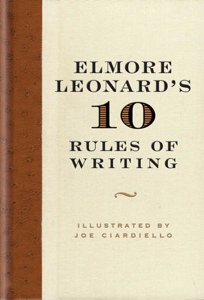
On Writing: The Less He Writes, The More Elmore Leonard Teaches

Don’t let the blog headline fool you, Elmore Leonard writes all the time. He just doesn’t write anything “people tend to skip.” The result as been a career of tight, lively, fast-paced novels that have entertained for decades.

Elmore Leonard is a master worth studying.

And even his lessons are brief.

20120916-102749.jpg
Leonard’s lone book on technique, 10 Rules on Writing is among the slimmest volumes on the subject ever published. And every sentence in it is solid gold.

20120916-103012.jpg

Every writer should take the hour or so necessary to read this great, fun, and incredibly useful guide to writing better.

Then, if you are really serious about learning from the master, read a couple of his books. They move like an Olympian’s pulse.

I keep his Road Dogs in my sight lines as I am writing just to keep me honest. Alas, I’ve got lots more editing to do before I can even approach the power of Butch. Maybe that’s a good thing; we all need to find our own voice. But surrounding ourselves with the work of authors we admire can serve as subtle reminders of what we aspire to achieve.

And Elmore Leonard’s book make damn fine company any day of the week, whether you want to read or learn.

Christopher Ryan is author of City of Woe, available on Kindle and Nook, and in print. For more info, click here.

Posted in America, comics, digital publishing, ebook publishing, fiction, film, independent publishing, pop culture, self-publishing, teaching, writing | Tagged , , , , , , | Leave a comment

On Writing: Joyce Carol Oates and Running Through Your Story

Years ago, I attended the South Hampton Writers Conference, and one of the best speakers there was Joyce Carol Oates. What a sight; she looks like a prettier version of Olive Oil and writes with such constant quality and voluminous output that I really wanted to know her secret.

To my shock, she told all of us up front.

Joyce Carol Oates said a key to her productivity is that she she runs. Yeah, runs. More than that, she watches a movie as she runs.

No, she’s not on some treadmill viewing The Godfather for the fortieth time. Oates watches “the movie of the book I’m writing, from beginning to end.” Even more interestingly, she claims she doesn’t start writing that particular book until she can watch the movie from beginning to end without glitches during a run.

The idea is unique, magical and sensible all at the same time. Not many writers use running as a visualization tool. Fewer require themselves to be able to “view” their entire project mentally prior to beginning to write. However, the power and confidence that would give a writer is stunningly sensible.

Oates’ spectacularly interior planning method has stayed with me all these years, and while i don’t run through my books like she does hers, I do let them simmer and emerge in my noggin while prepping to write them. Many a time my wife will discuss with me some family matter while I’m off with my detectives Mallory and Gunner chasing a suspect or dodging bullets. By the time I return to the present, she’s already smirking at me and gracefully starts over.

I hope the exquisite Ms. Oates and her method inspires some of you as she does me.

Christopher Ryan is author of City of Woe, available on Kindle and Nook, and in print. For more info, click here.

20120911-200750.jpg

Posted in America, digital publishing, ebook publishing, fiction, independent publishing, pop culture, self-publishing, teaching, writing | Tagged , , , , , , | 2 Comments