On Writing: Embracing Your Genre

A long, long time ago, in a galaxy right across the Hudson River, I took a screenwriting course that offered up sage cliches, formatting rules, and pacing maxims that collective attempted to pass themselves off as innovative screenwriting vision.

Despite this, I learned some valuable lessons.

One I want to share today is the idea of learning your genre. Writers must do this whether they be of the novel, screen, television, or stage variety. Even comics have to “know what’s out there.” And while I embrace the idea of learning your genre, I caution that it can lead to neurosis, an addiction to collecting all authors i your area, and an avalanche of reading that swallows whole your writing time.

So, our first lesson today is …Study, Don’t Obsess.

Yes, read your genre, but as part of your writing life, not all of it. But, with a bazillion books out there and a gazillion more on the way, how do we choose? I suggest two rules for what to read:

1) Read The Kings – meaning, read the best sellers in your genres, at least one by each leading author. From there, read at least one more by those Kings who resonate with you.

2) Read What Calls to You – meaning, visit bookstores (hurry, before they’re all reduced to websites or kiosks), find your genre, and peruse. Here we need to fight obsession and addiction (always remembering to budget both our money and our time, lest we wind up broke with a house full of books, and the producers of Hoarders at our door), but allow instinct to bring us what we need. I’ve made some of my greatest reading discoveries doing this. You will too.

Then, two more rules:

3) Read what you’ve purchased or borrowed for pleasure. This is a must. Reading for pleasure is what brought us to the dance, fired up our imaginations, and fueled our souls; if we sacrifice this pleasure and make reading all about studying the form, and working, we will wither as creative forces, and, I believe, our writing suffers. We must retain joy, or all of this is moot.

4) After reading, even days later, reflect on the books you liked, and ask yourself how the authors delivered the experience you enjoyed. If you know, make note of it and we’ll discuss what to do with it later. If you do not know, and if the book still lives for you, reread it consciously looking for when the author out the rabbit in the hat. What impressed you? Pace? What was done to control it? Make notes, even I. The markings, or by using ereader note taking options. And by this method our writing prowess grows.

Lastly, one you’ve noted how these authors make their work live and succeed, you need to reflect on the techniques used and how those techniques apply to your writing. Please notice that I did not use the word “compare”. That is authorial suicide, you are you, and they are successful because they have their own individual styles. But, like a young guitar player mimicking Eric Clapton, or Eddie Van Halen on the way to discovering their own style, so too, do we see how others do it, and fold that into our own style. What fits for us? How can we adjust what we do to get closer to our writing goals by using what we’ve learned from others?

I am not suggesting plagiarism, and personally have not re typed other authors to “see what it felt like” to write that book (Hunter S. Thompson famously did this with Hemingway’s work, but observe how different his style became), but I do believe in gushing over Elmore Leonard’s dialogue, Stephen King’s use of the common place to anchor his shocks, J.K. Rowlings’ sense of wonder elevating the YA genre beyond the previously conceived limits of that genre. This is how we learn from what is out there.

Sometimes, however, the answer is more negative. And that is great, too. One of those screenwriting cliches was “Take a genre and study three classics and seven bombs.” This is a gem of advice. Reading a book you hate teaches you more than reading a classic. Why doesn’t it work? What do you hate? Why? The lessons are numerous, and clear, and can benefit our writing as much or more than visiting with the Kings.

As always, I hope this helps.

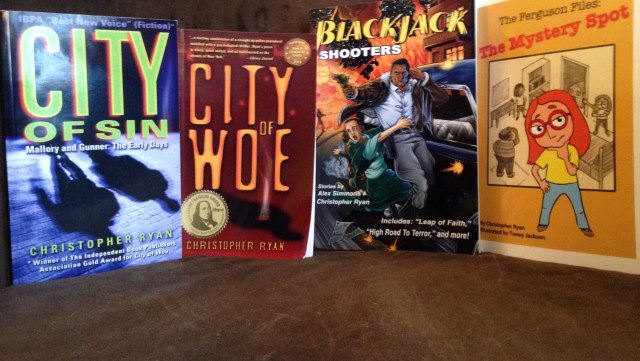
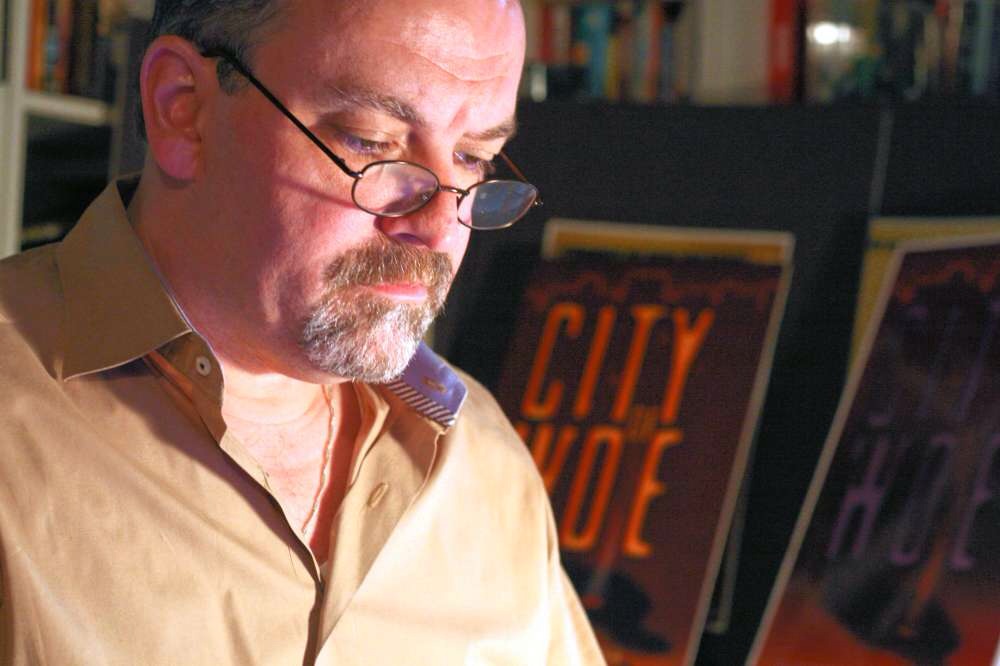
Christopher Ryan is author of City of Woe, available on Kindle and Nook, and in print. For more info, click here.

Posted in America, comics, digital publishing, ebook publishing, fiction, film, independent publishing, pop culture, self-publishing, teaching, writing | Tagged , , , , , , , , , | 2 Comments

On Writing: What to Do When You’re Overwhelmed

Morning comes in the middle of the night way too often for me these days, and I know why.

I’m overwhelmed.

This morning, my “To Do” list included grading 150 college app essays, 40 reaction papers, 100 timed essays, answer 30 emails, write the video script to promote the new album, blog to build a platform to sell a novel I proudly believe can stand on its own, write lesson plans, finish tweaking the rough cut of the Indy film I shot two summers ago, learn to utilize octal media better, yada, yada, yada.

So yeah, I stared off, freaking out.

Truth is, that doesn’t help anything. Here’s one thing that I find does help, and maybe it will help you.

When I am overwhelmed, first thing I make myself do is breathe. You should too. Most important, calm yourself and take stock. Then do the following:

1) Is there anything that can wait? If so, put them to somewhere out of your immediate eye line, giving yourself a date to get back to them.

2) Next, from the work that remains, what is absolutely due yesterday? Put these items in a pile close to you.

3) Is there anything left? Put it all in a pile we’ll call “first thing tomorrow.” Guess when we’ll see them next?

4) Now take that pile nearest you. Let’s take a look. Which is the shortest project, the one that is closest to being done? That becomes Job One today. Why? It will be done quickest, giving you a win. What’s the next smallest job? And so on.

5) be realistic. What can realistically get done in the time you actually have? Be honest with yourself. Don’t over-estimate, don’t rationalize. What can actually get done? Once you have a real picture, do one more thing…

6) Make a deal with yourself. Set the bar; today I will definitely get two jobs done. If I get the third done, my reward will be such and such, but if I get four done, then I will treat myself to this and that instead of such and such. Make sure both potential rewards are worth working to achieve … and affordable to your budget.

7) Then get to work.

I sincerely hope this helps.

Christopher Ryan is author of City of Woe, available on Kindle and Nook, and in print. For more info, click here.

Posted in America, comics, digital publishing, ebook publishing, fiction, film, independent publishing, pop culture, self-publishing, teaching, wife | Tagged , , , | 2 Comments

On Writing: What I Learned at My First Book Fair

The thing about self-publishing is eventually you have to sell what you write. And while the digital book world continues to grow, I keep finding people who only want to read my book in print. As I have committed to the learning experience of being a self-publisher, this is an avenue I feel compelled to explore, and it has lead me to … the book fair.

My experience was at the Collingswood Book Festival 2012, an event held annually in Collingswood, NJ.

Full disclosure, my experience is a total of one book fair, so expertise? Not so much.

But I learned a lot of practical information from this initial foray and want to share these dozen lessons with you.

1) Carefully read what is being offered. I expected a few things to be provided, and what I had actually purchased with my very affordable $30 participation fee was a 10′ by 10′ space in the street. When I reread the agreement, it was all spelled out clearly. Any false expectations were my fault. So …

2) Bring a table, chair, and, if the event is outside, a booth tent. The latter has a metal frame that opens and collapses easily. Every other seller at the fair will have one, and the sun will shine brightly on you all day if you do not, or will send rain clouds to ruin your books. It was the former for me, and I didn’t even …

3) Bring sunblock. You. The sun. All day. Bring protection. And also bring…

4) Clear packaging tape. Use it to tape your signs up, your table cloth down, and to secure whatever else needs securing. It looks better than black electrical tape, trust me. How do I know? Don’t ask. While we are discussing necessary materials, also bring …

5) Pens, or some other kind of writing utensil, in case people want you to sign the books they buy. Hey, you hit the big time! Sort of. Which calls to mind another crucial requirement: bring…

6) Realistic expectations. Have enough copies of your work to be prepared for a robust day of literary commerce, but prepare yourself for … not so many sales. People don’t know you yet, and it is difficult for them to commit to a stranger’s book, especially if he is staring at them or she is giving the hard sell. Welcome them to check the book out, but also give them some room. I placed my books at the right end of the table (closest to them as they passed in the traffic flow) and sat a little left of center to provide a bit space without ignoring. I found a simple “good morning” to all was welcoming but not intimidating. Another good is idea is to …

7) Print up flyers about your book. I printed up a couple of articles on the book, which garnered some attention, but not nearly as much as printed versions of the Amazon.com reviews. Those left with potential customers at a three-to-one margin. And if you do offer flyers, bring something cool to hold them down. I used a piece of counter top left over from a bathroom remodeling. It garnered several compliments, which was nice, but not as crucial as remembering to bring…

8) A lunch box, with water, snacks, whatever you need to sustain yourself over several hours especially if you don’t ….

9) Bring a friend, partner, or fellow published author. This person will help staff the table, especially during bathroom breaks, can help handout flyers, attract potential buyers, and keep things going. But if you do partner up, and want to go see what else is going on, remember…

10) You are there to sell your book, not buy twenty other books from people. Lots of writers are also book junkies, so … Beware. Don’t spend more money than you make. Instead, use that leg stretching to …

11) See what the competition is doing, how their booths look compared to yours, and where the action is. You may find that your booth is not situated for optimum sales. Don’t beat yourself up, you didn’t know. And don’t blame them, you didn’t ask. What you should do when you book these events is request to be put as close to the main book sales action as possible.

12) Don’t freak out if one booth has an exceptionally long line. Investigate if you can. Most often you will discover the writer at that booth is actually a local celebrity like a goalie for the nearest NHL hockey team, or a reality TV star. These people are not your competition.

Bonus:

13) if you do run across your competition, someone in the same genre as you who is doing better business, don’t get mad, get educated. Assess what this person is doing. It may be as simple as she or he has eight books out and you have one. You know the solution there. It may be a bigger booth, advertising, cookie give always, who knows? Observe. Assess. Adapt.

I hope these lessons help should you consider participating in a book fair. Is it a cost-effective endeavor? I broke even financially, but experienced making sales (very fun), learned a lot about how something like this works, met and learned from other self-publishers, and made a key contact I hope will pay off soon. As a result, I count this as a profitable experience, if not a get rich quick strategy. For someone who tends to stay home and write, this was a big step forward. Whether it proves to be a steady component of my business remains to be seen.

Christopher Ryan is author of City of Woe, available on Kindle and Nook, and in print. For more info, click here.

Posted in America, digital publishing, ebook publishing, fiction, independent publishing, self-publishing, writing | Tagged , , , , , , , , | 4 Comments

On Writing: Making it through The Monster of Daily Life

Where have I been? Away from my blog for too long, and I woke up wondering what could have kept me away.

Life.

By that I mean wife, sons, death of friends, work, grading papers, writing lesson plans, orienting to a new school year, promoting a novel, reviewing film and writing copious notes as part of post-production, planning a promotional video for a band I’m in. Movies. The NFL. Presidential campaign lunacy —

None of this is an acceptable excuse, if I am to be completely honest. Not for me. Not for you.

Writing isn’t something we do instead of living our lives. Writing is an integral part of our lives. We shouldn’t decide whether to write or do one of the activities listed above; we should write as part of them.

Blog with a nice cup of (insert addiction here). Write commentary to the politics of the day while watching the shows you’ve recorded. Vow to watch less of them, especially the repeats. Write while ignoring the commercials during that football game you can’t miss. Write in the early hours when no one is up and you shouldn’t be, either. Write in those wind-down minutes in bed before sleep takes you.

The mistake we make is deciding when we have time to write. If we write during the time we spend thinking of when we can write, the problem won’t exist. Don’t procrastinate, write about procrastination.

Does it sound unrealistic? Really? I just wrote this blog while waiting for my tea to boil. Short, sweet, and offering up a valid point I needed to see, and I hope you did, too.

And so my writing gap is over, my procrastination ended, my blog revived, my writing live renewed. We begin again. we keep calm, write on, and life is a little more worth living.

Your turn.

Christopher Ryan is author of City of Woe, available on Kindle and Nook, and in print. For more info, click here.

Posted in America, digital publishing, ebook publishing, fiction, film, husband, independent publishing, kids, love, marriage, parenting, politics, pop culture, self-publishing, sons, sports, super-heroes, teaching, teenagers | Tagged , , , , , , , , | Leave a comment

On Writing: The Less He Writes, The More Elmore Leonard Teaches

Don’t let the blog headline fool you, Elmore Leonard writes all the time. He just doesn’t write anything “people tend to skip.” The result as been a career of tight, lively, fast-paced novels that have entertained for decades.

Elmore Leonard is a master worth studying.

And even his lessons are brief.

20120916-102749.jpg
Leonard’s lone book on technique, 10 Rules on Writing is among the slimmest volumes on the subject ever published. And every sentence in it is solid gold.

20120916-103012.jpg

Every writer should take the hour or so necessary to read this great, fun, and incredibly useful guide to writing better.

Then, if you are really serious about learning from the master, read a couple of his books. They move like an Olympian’s pulse.

I keep his Road Dogs in my sight lines as I am writing just to keep me honest. Alas, I’ve got lots more editing to do before I can even approach the power of Butch. Maybe that’s a good thing; we all need to find our own voice. But surrounding ourselves with the work of authors we admire can serve as subtle reminders of what we aspire to achieve.

And Elmore Leonard’s book make damn fine company any day of the week, whether you want to read or learn.

Christopher Ryan is author of City of Woe, available on Kindle and Nook, and in print. For more info, click here.

Posted in America, comics, digital publishing, ebook publishing, fiction, film, independent publishing, pop culture, self-publishing, teaching, writing | Tagged , , , , , , | Leave a comment

On Writing: Joyce Carol Oates and Running Through Your Story

Years ago, I attended the South Hampton Writers Conference, and one of the best speakers there was Joyce Carol Oates. What a sight; she looks like a prettier version of Olive Oil and writes with such constant quality and voluminous output that I really wanted to know her secret.

To my shock, she told all of us up front.

Joyce Carol Oates said a key to her productivity is that she she runs. Yeah, runs. More than that, she watches a movie as she runs.

No, she’s not on some treadmill viewing The Godfather for the fortieth time. Oates watches “the movie of the book I’m writing, from beginning to end.” Even more interestingly, she claims she doesn’t start writing that particular book until she can watch the movie from beginning to end without glitches during a run.

The idea is unique, magical and sensible all at the same time. Not many writers use running as a visualization tool. Fewer require themselves to be able to “view” their entire project mentally prior to beginning to write. However, the power and confidence that would give a writer is stunningly sensible.

Oates’ spectacularly interior planning method has stayed with me all these years, and while i don’t run through my books like she does hers, I do let them simmer and emerge in my noggin while prepping to write them. Many a time my wife will discuss with me some family matter while I’m off with my detectives Mallory and Gunner chasing a suspect or dodging bullets. By the time I return to the present, she’s already smirking at me and gracefully starts over.

I hope the exquisite Ms. Oates and her method inspires some of you as she does me.

Christopher Ryan is author of City of Woe, available on Kindle and Nook, and in print. For more info, click here.

20120911-200750.jpg

Posted in America, digital publishing, ebook publishing, fiction, independent publishing, pop culture, self-publishing, teaching, writing | Tagged , , , , , , | 2 Comments

On Writing: A Reality Check From Richard Price

Richard Price, author of literate bestsellers including Clockers, Freedomland, Samaritan and Lush Life, screenplays including Sea of Love and The Color of Money, and notable work on The Wire and NYC22, is the consummate New York writer. His dialogue crackles with life, his descriptions are short and sharp, his pacing struts with an urban bop and is definitely strapped at all times.

I met him once, way back in the 1980s, and he taught me three things about writing that I carry to this day.

I was asked by then Bronx Borough President Fernando Ferrer’s office to work on the 250th anniversary of The Bronx. I had helped get the New Voices of Freedom to perform, and my reward was escorting E.L. Doctorow through the ceremony.

I read or retread everything the esteemed author wrote, luxuriating in his elongated sentences, drinking up his sweeping descriptions, and his chronicling of a New York of the past. On the day of the ceremony, I was ready to discuss literature, writing, New York … and when he arrived, Doctorow walked right by me to a member of Ferrer’s staff whose absolutely killer legs were waiting at the top of the stairs. Frankly, knowing her intelligence, grace, and beauty, I couldn’t blame Doctorow for his choice.

As a consolation prize, they handed me Richard Price. I panicked. I had studied Doctorow; I only knew one Price novel, The Wanderers, his first, and the low budget film made from it and shot in The Bronx. Luckily, my brother Soupy and half the student population of Columbus High School had been extras in that film, so at least I could break the ice.

Price was incredibly gracious, sitting with me in the audience and overlooking my obvious ignorance about his other novels or his screenplays, including an Academy Award nomination for The Color of Money. I eventually confessed that I, too, wanted to write novels someday. He immediately offered the first lesson, “It’s a long, lonely road.”

This startled me, but Price explained that the practical reality is that writing is almost always an individual effort. It takes being able to shut the rest of your life away, sit yourself down, and write it all out.

Yeah, I know this sounds stupendously obvious, but for an accomplished author to look me in the eye and let me see him acknowledge the journey did two things. First, it made that journey real to me. Price’s words washed away the romantic notions of writing, and reduced writing to an actual activity that is realistically doable. Second, seeing that author say those words helped me see myself actually doing it. The process was no longer shrouded in mystery for me. There was no magic secret. You just had to sit down and work.

The second lesson came a little later in the ceremony, when my older brother Barney arrived. I introduced him to Price and informed the author that my brother was (at the time) in the NYPD working with Bronx Narcotics. The words had barely left my mouth and I no longer existed. Price went right to work, interviewing him, discussing The Job and the city’s drug culture. I actually moved so they could sit together.

Turns out he was researching Clockers at the time, and my brother came this close to being an advisor on the book, until Price met a guy in Jersey who provided him even more access.

Seeing the writer at work was an entirely unexpected learning experience. Price immersed himself, jumping at an opportunity to learn more, research more, prepare. Here was a guy ready to work 24/7. I never forgot that, as my wife, who has spent a ridiculous amount of time waiting for me to finish talking to someone or research something, can attest.

The last lesson came when he did a reading. No flourish, no song and dance, he simply acknowledged the audience, opened his material, and spellbound an entire auditorium in the familiar diction and natural beats of New York living. His prose crackled with a pulse I recognized as home.

In that moment, he became one of my all-time favorite writers, and I have exhilarated in and studied all of his writing since. Sure, Doctorow was impressive too that day, but in his slightly distant, professorial way. Price was alive, and real, and touched right where I lived. To this day I want to be that kind of writer.

And that, my friends, is solid gold.

Christopher Ryan is author of City of Woe, available on Kindle and Nook, and in print. For more info, click here.

20120903-103718.jpg

Posted in America, digital publishing, ebook publishing, fiction, film, independent publishing, pop culture, self-publishing, teaching, writing | Tagged , , , , , , , , , | 2 Comments

On Writing: Learning from The Big Boys – Stan Lee

I am starting a series of blogs recounting lessons I’ve learned from big time writers. Since the mega-blockbuster film “Marvel’s The Avengers” returns to theaters this weekend to end the summer like we began it, I am going to start with Stan Lee, the co-creator, with Jack Kirby, of The Avengers, Iron Man, Thor, Spider-Man, the Fantastic Four, the X-Men, and so many more that he should be considered on par with Walt Disney himself.

I interviewed Stan the Man when I was just 15 years old, in the mid 1970’s. I was part of my high school lit magazine and the supervising teacher decided he wanted to do an issue without drippy teen heartbreak poems. Instead he wanted to create a magazine about New York; everything had to be linked to New York. When I suggested that the most creative guy in New York City was Stan Lee, the teacher smiled. “But how are you going to interview him?” I said I would just call him. The teacher chuckled and dared me to do it.

So I did. I got the number for Marvel Comics, called and asked for “Stan Lee, please.” I got his secretary instead, and she could tell immediately that I was just a kid. But she didn’t hang up. She was great, pleasantly explaining that Stan was busy at the moment, and asking when my deadline was. “In three months,” I said. She laughed, “Well, you’ve got me there, haven’t you? Let’s see if I can pencil you in.”

To my surprise, and the teacher’s shock, she gave me an appointment. On that date, I called, my five questions laid out before me. And Stan Lee actually got on the phone!

Here’s lesson number one from The Man: never let yourself get too big, too self-important. Here was a writer, creator, editor, publisher at the height of his power, in the midst of changing an entire creative genre, and he did an interview with a teenager for a school magazine. Smallest possible audience imaginable, and he made time for me. How can we as writers do less?

Even more impressive, Stan Lee did that interview in full Stan Lee mode. He was energetic and positive, gracious and lively – for a fifteen year old. Over the years I have seen dozens of interviews with Stan, and have seen him at comic cons. You know what? He delivers every time with that same positive energy and lively grace.

And that’s lesson number two: give it your all, every single time, no matter the pay off. His generosity has stayed with me all these years, and I have modeled my public behavior after his obvious love for what he is doing.

If you truly want to be a successful writer, or, honestly, a successful anything, Stan Lee’s example is worth following.

Excelsior, indeed.

Christopher Ryan is author of City of Woe, available on Kindle and Nook, and in print. For more info, click here.

20120831-181543.jpg

20120831-181712.jpg

Posted in America, comics, digital publishing, ebook publishing, fiction, film, independent publishing, kids, love, pop culture, self-publishing, super-heroes, teaching, teenagers | Tagged , , , , , , , , , | Leave a comment

A Guy’s Menopause Survival Guide

I love my wife. That needs to be said first, if we are going to do any good here today at all.

I love my wife and she is going through menopause. As a result, I am learning a lot. And I’m here to tell every guy out there what he needs to know to survive, er, assist, um, be there for his beloved during this challenging time.

The following isn’t for all men. Lots of them run, flee, “work late,” paint the ceiling, fix unbroken pipes, fall asleep while watching the game, or use other lame strategies to avoid dealing with life with the wife.

Those men are cowards.

I’m talking to the brave souls who hang in there, engage, share the experience, try to help.

You know, the dreamers.

Those men need to know a few things. Here we go:

1) Your wife will experience hot flashes. That’s when she feels like she’s bursting into flame, roasting from inside out. Think Johnny Storm, the Human Torch, without the calm or snappy one liners.

You need to understand that you cannot help here. You cannot predict, schedule, expect, plan for, or narrow down when these happen. You cannot even fathom what the experience is like. If men experienced even one hot flash, we’d be running around in our tightie whities, screaming like Will Ferrell in Talledega Nights.

But she will plan accordingly, so prepare to be cold. It might be Christmas Eve, girlfriend will have the air conditioner on full blast. Bring extra clothes. Especially at bedtime. She will be in her lightest sleepwear, tossing off the covers, turning up the AC. You will be wearing a hoodie, sweats, gloves, and three pairs of socks. Deal with it. Most of us do not lose the nose to frost bite.

And whatever you do, avoid sleeping elsewhere. She will interpret this as abandonment, the end of your marriage, adultery, or worse, she’ll get used to it, and you will never get back in that bed. Ever.

2) She will experience memory loss. Get used to repeating things.

And never, ever make the mistake of trying to exploit this. The love of your life might forget to pick up milk, where she parked, or where her house keys are, she may spend time looking for the glasses on her head, or the coffee mug in her hand, but she WILL NOT forget where you are, who you are allegedly with, what you should be doing, or when you are supposed to be home.

Cross that line at your own risk, brother.

3) She will be emotional at times; all of them will be unpredictable.

How do you handle it? Remember seeing that movie that time when the soldier finds he’s wandered into the middle of a minefield? Handle it like he did. But one more thing. Remember his buddy, the one who got cocky and blew his own legs off genitalia and all? You’ve been warned.

4) She will gain weight.

Do not, under any circumstance, acknowledge this. Ever. Here’s the way out:

“Does this dress make me look fat?”

“I think it looks good on you, but will look better around your ankles.”

You’re welcome.

My work here is done, gentlemen. Ignore my advice at your peril. Good luck to you all.

Christopher Ryan is author of City of Woe, available on Kindle and Nook, and in print. For more info, click here.

Posted in America, husband, love, marriage, parenting, pop culture, teaching, wife | Tagged , , , , , | Leave a comment

Parenting: Hulk Smash, or War of the Dads

As a Dad-in-Progress, I am always working to improve my parenting skills. Okay, that’s code for “I am a worrier who obsesses on whether I am doing all I can for my sons, and as a result, I tend to do too much and then wind up looking silly.”

A lot of us have been there, or are there right now, no matter how cool we pretend to be. And some of us multi-task our worries. I am a father of twin 16-year-old boys. Lots of potential for concern. But honestly, they aren’t the problem, i am.

See, I have different sides to my Dadness. There is Rational Dad, who is in control most of the time, Warrior Dad, who wants to go to battle for my sons’ best interests, and Worrier Dad, who obsesses about every detail of their lives beyond any measure of good judgment. The problem is Worrier Dad fuels Warrior Dad, they gang up on Rational Dad, and then I find myself in one of my sons’ rooms in mid-ranting speech.

And it can happen at any time, like Bruce Banner’s potential to turn into the Hulk.

Here’s a snapshot of Worrier Dad right at this moment:

1) Are my sons’ grades good enough to attract colleges? Have I held my expectations high enough? Are they too high? How high is too high? Am I high right now to ask these questions?

2) Are they considering the right college major for their talents? Should a guy who initially went to college to major in Rock Star really have a say in this?

3) How the Hell are we going to finance two college tuitions? Is bank robbery a viable option?

4) Are they taking their SATs seriously? Should I push them? Have I pushed them too much so now they hate and fear the SATs? Do I hate and fear the SATs? (Ummm, yes.)

5) How is their social life? Do I push them to date more? Less? Do I hang back and not get involved because it is their business? Are they experienced enough to succeed socially in college? Should I ask their Uncle Mikey to set them up with those friendly girls from that bachelor party?

6) One guy’s working a crappy teenage job, the other is laying on the floor memorizing ESPN. Is the working guy working too much? Is Dr. ESPN not working enough? How do chores fit in fairly?

7) Lots of kids their age are out drinking at parties. My guys are not. Do I rejoice in their moral turpitude? Do I cringe that they may be crippling their social standing because Dad is a strict jerk? Should I even be looking this gift horse in the mouth?

8) What the Hell is going on in their rooms? It looks like their drawers vomited up all the clothes they own. Should I hire armed guards to keep them in there until they clean up? Or should I just pitch a new version of The Odd Couple featuring Oscar and Oscar?

9) They bicker a lot. Are they going to be close as adults? Should we have had more kids for me to obsess over? Would that have attracted the attention of Child Services?

10) is Xbox ruining their cognitive skills? Are they reading enough? Do they sleep too much? Not enough? Eat too much junk? Not enough asparagus? Do they get enough exercise? Are they ready for a zombie apocalypse?

Yeah, that’s about five seconds in my brain. And if I am not careful, any one of those thoughts can expand and I will find myself upstairs in their room trying to “address the issue.” Hulk smash.

But here’s the thing. In my moments of clarity, I know my sons are solidly moral, upstanding citizens. What more can any parent expect? And this is the thought that brings me back to Earth.

It is okay for us to worry; it is in our parental DNA. The key is to look at your children objectively, or at least honestly, or with the help of the sane partner in the relationship (in this case, my wife).

Use the Worrier Dad to fuel calm discussions from Rational Dad, not scorched earth campaigns from Warrior Dad, and be willing to actively laugh when one of the goofier sides of you threatens to Hulk out. If you can do this, the offspring will always benefit from your extra effort.

And that’s the goal, isn’t it? Hulk smile fondly at him kids.

Christopher Ryan is author of City of Woe, available on Kindle and Nook, and in print. For more info, click here.

Posted in America, husband, kids, love, marriage, parenting, pop culture, sons, sports, teaching, teenagers, wife | Tagged , , , , , , , , , , , | Leave a comment