Ten-Step Program to help Avengers: Age of Ultron fans survive until May, 2015

Okay, okay, stop rewatching the Avengers: Age of Ultron trailer for a minute. You don’t have to live like this, hitting replay numerous times a day, stalking comic book movie sites for new trailer breakdowns and theories and rumors and interpretations. Searching for some new news, new photo, anything more on a film that doesn’t come out until May, 2015.

There is hope.

You can get your life back by following these ten steps:

1) Admit you have lost control of your addiction to all things Avengers: Age of Ultron and are powerless to regain control of your life on your own.

2) Embrace this truth: Joss Whedon will not let you down.

3) When the desire to replay the trailer hits you, repeat this mantra, “All things Whedon come to those who wait.”

4) Should the need to replay the trailer get too strong, chant this, “Waiting enhances enjoyment! Waiting enhances enjoyment!”

5) Walk away from your media device, and stay away. Rewatch Marvel movies to help you extend your time away from the trailer.

6) Look forward to Agents of SHIELD and the promise of new Avengers: Age of Ultron footage. Earn the right to enjoy that footage by limiting yourself to one replay of the Avengers: Age of Ultron trailer per day.

7) Reread Avengers comics and trades instead of replaying the trailer.

8) Be daring! Venture out into the world, maybe to pick up bread and milk.

9) Resist the urge to discuss Avengers: Age of Ultron with the cashier at the supermarket, unless she has telltale signs of Avengerolic addiction (for example, if she is watching the trailer sans sound at her register, or is wearing an “I love Hawkeye” T-shirt. If she is — soulmate!).

10) After Tuesday night, return to the top of this list and begin again, substituting “new exclusive footage from Marvel’s Avengers: Age of Ultron” for the trailer. Repeat steps as necessary until May, 2015. Then…filmgasm!

We hope this helps. It helped me. Writing this earned me a reward replay of Avengers: Age of Ultron.

May the Joss be with you.

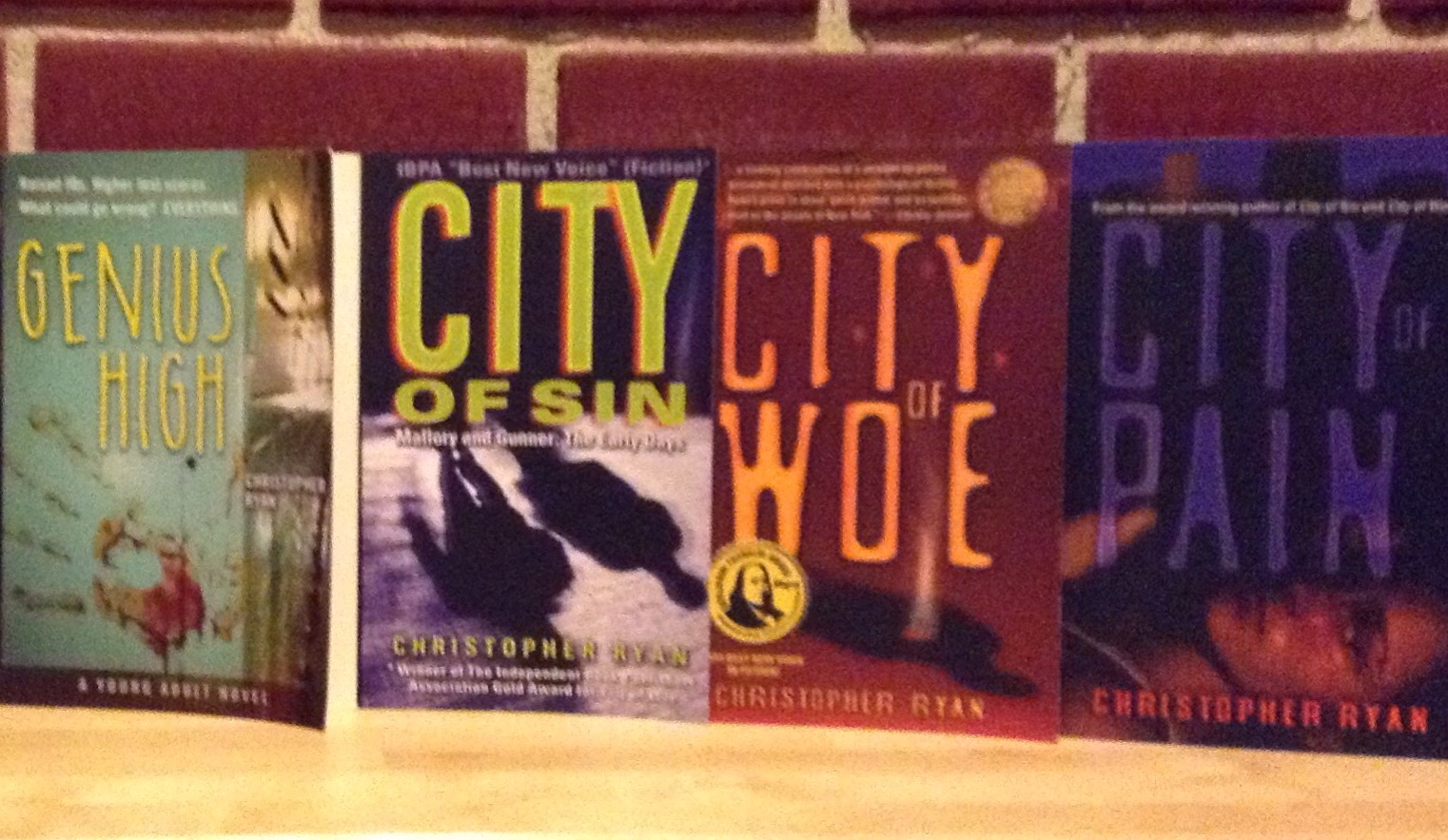
Christopher Ryan is author of City of Woe, available on Kindle and Nook, and in <a href="http://www.amazon.com/City-Woe-Mallory-Gunner-1/dp/1475159234/ref=sr_1_9?

IMG_1787.JPG

IMG_1788.JPG

Posted in Uncategorized | Leave a comment

The Reason the Avengers: Age of Ultron Trailer Scares

So many things are going on, so many strings to get tangled in….

Fans have been waiting, wanting, yearning to see the trailer for AVENGERS: AGE OF ULTRON since it first awed fans at the San Diego Con back in July. Another showing at the New York City Comic Con raised desires even more. We leapt at each fake trailer, every rumor, and were repeatedly disappointed.

And then, a promise. The trailer would be shown as an “exclusive broadcast premiere” during the next episode of Marvel’s Agents of SHIELD, theoretically to help boost ratings for that program. The phrasing of that promise, however, got the internet buzzing. Maybe it would “leak” beforehand.

Last night, it did.

And it is glorious.

From the incredibly effective music (kind of Black Sabbath for full orchestra), to the dissonant images (why are that lady’s breasts falling out? Ballet?), to disconcerting twists on Avengers iconography (why does Thor drop his hammer? Why does Banner look so shattered wrapped in that blanket? OMG, Cap’s shield….), this trailer teases more questions than it provides answers.

Except for Ultron. He is clearly dismissive of our heroes, sure he is right, determinedly horrific in his vision of freedom and his solution for all that ails the world.

At a time when war rules, again, and drones kill with ease, and corporate marauders are feted as the ruling class while teachers are all but run out of town, and while the Point of No Return for global climate change is just three years away but we are collectively doing nothing about it, there is a reason Ultron truly scares. In a terribly accurate way, Ultron is our unforgiving conscience, his gravelly voice confirming that we are all in serious trouble now….

Christopher Ryan is author of City of Woe, available on Kindle and Nook, and in print. For more info, click here.</em

20131227-104807.jpg

IMG_1787.JPG

Posted in America, comics, fiction, film, politics, pop culture, super-heroes, teaching, teenagers, Uncategorized, writing | Tagged , , | Leave a comment

Ten a Tips for Attending a Books Fairs

Many independent authors work book fairs and community events to get additional sales. But are these events worth doing?
Depends on your agenda.
If you are looking for extremely high volume sales, keep looking. If you are interested in seeing who else is out there, comparing notes, learning a bit, and actually meeting and speaking with real readers, these events are rich experiences.
Don’t get me wrong, some book fairs do result in satisfactory sales, but what they offer in hard truths and firsthand knowledge seem to always outperform sales.
I was at the Collingswood Book Fair this weekend, and despite foul weather, I learned a few valuable lessons:

1) First, readers there were looking for YA material. I have a series in the works; now I am inspired to move up its publishing timeline.
2) Sincere fun energy attracts customers (this CANNOT be faked). Work with friends if you can.
3) When customers sincerely want the book, and come back to the book, but are struggling with the price, be open to what it will take to make that sale.
4) Make sure you have time and table coverage to visit with other writers at other booths, and bring business cards to exchange. Networking is part of the value here.
5) Always, always, always treat the book fair runners warmly. These people do not work for you, they are working with you.
6) Have reasonable, or better still, conservative expectations regarding sales numbers for the day.
7) Remember to have fun. It was amazing to see how many booths were staffed by unhappy people. This drives potential customers away. Can anyone say vicious cycle?
8) Do not be afraid to say hi. Sometimes, breaking the ice is all it takes to make a sale.
9) Bring snacks, a sweater, comfortable shoes that will stay dry.
10) Be comfortable but professionally presentable.

I hope this helps Indy authors have positive book fair experiences.

IMG_1775.JPG

Christopher Ryan is author of City of Woe, available on Kindle and Nook, and in print. For more info, click here.</em

20131227-104807.jpg

Posted in America, digital publishing, ebook publishing, education, fiction, independent publishing, pop culture, self-publishing, Uncategorized, writing | Tagged | Leave a comment

Study Those Whose Writing Impresses: Joss Whedon

Part of any writer’s responsibility is to study the writers who influence his or her writing.
Experts will advise the developing writer (and any writer worth a reader’s time should consider herself/himself developing on some level) should read everything available in his/her chosen genre, but writers should also read outside their genre, as well as a wide variety of non-fiction (everything feeds the writing; the more you vary what you read, the stronger your writing can become).
Sometimes that leads to highbrow tomes that will impress snobs and stop the queen in her tracks. Other times, this leads to obsession and delight and big damn fun that fuels the writing.
Right now, I’m enjoying a bit of both.
I’m having a Joss Whedon summer. I didn’t plan it that way, but I am so glad it happened.
Destiny started in a bookstore.
I happened across Reading Joss Whedon Edited by Rhonda V. Wilcox, Tanya R. Cochran, Cynthea Masson, and David Lavery. I have read these Whedon Studies scholars before, including Why Buffy Matters: The Art of “Buffy the Vampire Slayer” and Fighting The Forces: What’s at Stake in “Buffy the Vampire Slayer”, so I knew I was purchasing a collection of collegiate papers on Whedon’s canon.
What struck me about Reading Joss Whedon was that is seemed so clearly designed to be used as a college text book. I was reminded of the fact that a number of colleges now offer Whedon Studies classes, something I would love to teach, to be honest. I was interested in how this collection would include papers from across the Whedonverse, and whether it would hold up as a collegiate text.

20140722-111727-40647582.jpg

But this reading project has grown since I left the safe environs of the bookstore. I realized that I also had another Whedon volume I had not yet read, Joss Whedon: The Complete Companion: The TV Series, The Movies, The Comics Books, and More (edited by Pop Matters). And then two more surfaced, Joss Whedon’s Names: The Deeper Meanings Behind Buffy, Angel, Firefly, Dollhouse, Agents of S.H.I.E.L.D., Cabing In The Woods, The Avengers, Doctor Horrible, In Your Eyes, Comics, and More, written by Valerie Estelle Frankel, and finally, Joss Whedon: The Biography by Amy Pasacale. Suddenly, I had a summer course of study. I dove in.
Pascale’s bio is not supposed to be available in the U.S. Until August 1, but Amazon sent it to me a few days ago, and I inhaled it. Exceedingly readable and very enjoyable, though, as any true Whedon fan, I would have preferred a thousand pages instead of the mere 387 (plus indexes) offered here.
Yes, there are plenty of interviews from writers and actors and tech people involved, but much of it comes from published sources, so not much new ground is broken here.
The insights on Whedon’s characters and his writing style are informative, appreciated, but left a hunger for more, more, more. A separate volume could be written just on his characterization and story development, and another on his actual writing process.
But the bio could not be put down.
Another interesting read has been Joss Whedon’s Names. While clearly an unsanctioned and unofficial text, Frankel is clearly well-versed in literary research, and her views on the roots and literary, scientific, spiritual, and cultural links to the names Whedon gives his characters is fascinating and inspiring.
Joss Whedon: The Complete Companion is closer to my previous reads, an exhilaratingly representative collection of papers and essays about all things Whedon, covering the wide variety of collegiate topics listed above. Consistently fascinating, insightful, and well researched, this volume offers so much for a writer to consider about Whedon’s work, and then her or his own. What connections to the collective literary/cultural conversation are we making? The more we put into our writing, the more readers will get out of their experience of our work.
I look forward to finishing these readings and devouring Reading Joss Whedon this summer. And yes, one side effect is a desire to revisit his TV shows and films and comics, and that, in my humble experience, is never a bad thing.
How is it fueling my writing? I do find myself considering my creative heroes, their writing styles, and work, and the effect of that on my own writing. I do notice that when I am away from the writing, I am thinking about it, visualizing it, replaying it in my head more often. And I am getting to the writing with more energy, more faith, more discipline
Whatever it takes to serve the story….

20140722-114042-42042107.jpg

</ Ryan is author of City of Woe, available on Kindle and Nook, and in print. For more info, click here.<

Posted in America, comics, fiction, film, independent publishing, pop culture, super-heroes, Uncategorized, writing | Tagged , , , , , , , , , , , | Leave a comment

Back to Writing Roots

First, an apology.
I have wandered away from blogging, into the delicious struggle of fiction writing. But excuses help no one. So, let’s discuss writing.
I am currently 239 pages into a sequel to CITY OF WOE, to be entitled CITY OF PAIN (part of a planned trilogy “The City Series” that will serve as both modern detective thrillers and an echo of each section of Dante’s The Divine Comedy).
I must confess that I tried to modernize, tried to forego my long held habit of brainstorming on index cards.
But now, 239 pages in, I am missing them.
Standing in the shower, I miss them.
Tossing and turning in bed when I should be sleeping, I yearn for them.
And at the writing desk (table, actually, but that’s another blog), I miss being able to easily look at them for quick reference on story references.
And there is gold in those cards.
First, index cards allow a writer the freedom of just writing story ideas, bits of dialogue, character sketches, plot points, scene ideas. No need to be deep or groundbreaking or impressive. This is just gathering thought.
When those ideas have piled up, organizing the cards into some sort of progression through the story offers clarity.
Pinning them to a large bulletin board creates the flow, reveals story gaps and pacing oddities, allows a writer to adjust that flow easily by moving some cards, adding a few new ones. And then when writing, a quick look confirms story facts, keeps names straight, allows quick access to chapter numbers in case a rewrite is needed, and so much more.
And I had been trying to do it all in my head. Hah! Not the most efficient use of time and mind and energy, as I have discovered while trying to keep 239 pages of information straight in my head.
So I am going to write my beloved index cards now, at the eleventh hour, for peace of mind and security of balance and to easily add little story touches as the novel deepens.
The lesson? Don’t dis what works, respect your process whether it is cutting edge tech or blunt, aging favorites, and never get in the way of what the writing needs.
As always, ya gotta serve the story.
Now if you’ll excuse me, I have an index card filled act of contrition to complete.

20140721-165229-60749856.jpg

</ Ryan is author of City of Woe, available on Kindle and Nook, and in print. For more info, click here.<

Posted in digital publishing, ebook publishing, fiction, film, independent publishing, self-publishing, writing | Leave a comment

Neil Young – The Troubling Duality of “Everybody Knows This is Nowhere”

20140511-071711.jpg

It is impossible to pick the definitive Neil Young album because he has put out so many classics. Some will say the easy choice is Decade but I am working with a rule that anthologies and greatest hits and live albums are separate entities. We will discuss some classics from those categories at a later date, but for now we are discussing classic albums of once new work from artists we want to celebrate.

Thus the problem.

Neil has too many that fit into this “classic” criteria. So I have to resort to personal choice for favorite classic Neil. And that is Everybody Knows This is Nowhere. Yes, I love Harvest, and On the Beach, and Tonight’s The Night, and so many more, but the all time most classic for me is Everybody Knows This is Nowhere. One of the reasons is because there is a troubling duality to this work; it is at once gloriously light and free, but at the same time can be seen as something very, very dark. After all these years, I still hear both, and it continues to fascinate.

Let’s drop the needle…

“Cinnamon Girl” lets us know, from the first thickly fuzzed, slightly sloppy chords, that we are in vital territory. Neil always sounds especially right with Crazy Horse, and here he creates an ode to the ultimate band girlfriend, a woman as ephemeral as all of our romantic dreams. We never find out much about her beyond “my baby loves to dance” but the speaker is clearly attracted. And here we have our first hint of trouble. This song is more about the speaker, “a dreamer in pictures, I run in the night” and the lyrics suggest there may be more than one girl who fits his profile, “the drummer relaxes and waits between sets for his cinnamon girl” and “I could be happy the rest of my life with a cinnamon girl”. She is an ideal, a specific type, and only in retrospect later in the album does this become worrisome.

Perhaps my favorite Neil song ever (and that is saying a lot) is “Everybody Knows This is Nowhere”. I knew most of the other songs in this album from Decade, but one hot summer hanging out in Roger’s family apartment, drinking beers to cool down because there was no escaping the baking heat inside or outside the lab rat maze that was Parkchester in The Bronx, he tossed this album on, and it became the soundtrack of that summer. When I met this song. I was not a country music fan, but this is indisputably country, with a catchy Neil guitar hook, and lyrics that spoke directly to how we felt about where we lived. It just vibrated summer, and made the place more livable. Even today, as I enjoy where I live, this song transports me to that summer, in that place, with that beer, and I am grateful for the trip. However, the ideas in this song, the boredom, the lunatic “lalalala lalalalas”, they all flip on the listener later, as does the coda “everybody knows, everybody knows….”

“Round & Round (It Won’t Be Long)” extends that summer feeling while also thickening this loose plot of boredom and the slightly asylumesque undertone; this song could go either way. Easy going and lyrical, this mellow tune is a dream starter, almost hypnotic in feel, with just enough hints about dealing with your own shortcomings to inspire some quiet reflection, or maybe something more … off. Even the backing vocals here that are always slightly behind Neil, like Robin Lane is singing with the radio, or is out of phase with the speaker’s narrative about “losing inside”. And then there is this: “How slow and slow it goes, to mend the tear that always shows, it won’t be long, now the hours will bend through this time that you spend ’til you turn to your eyes, and you see your best friend looking over the end, and you turn to see why, and he looks in your eyes, and he cries…”

Uh oh.

And then, it’s on.

“Down By a The River” is so many things at once; mellow groove, masterful coming together of the Neil Young and Crazy Horse sound, classic harmonies, and the soft, calm narration of …. a murder?

What the Hell?

This has been a question considered, discussed, and grooved to for the song’s entire history. Neil is not a violent man (Crazy Horse solos aside), and these lyrics stand apart from his usual topics, and can be troubling if considered too closely. (I would have hated to read about some guy who was high and listening to this when he did violence to his girlfriend. Thank God I never have). But this track is so disturbing it alters the perception of the rest if the album.

Meanwhile, the band embarks on one of the all-time great slow jams of the era, and definitely of Neil’s career, allowing us time to consider, really consider, the lyrics. That basically one-note lead doesn’t give us much relieve either, allowing us to focus on what is going on here, and maybe suggesting a bit, too. Talk about saying a lot with a little.

And then the soft, calm, mournful Neil voice is back, “This much sadness is too much sorrow, it’s impossible to make it today….” Somehow perfect, and worrisome again because it leads into the troubling chorus, “Down by the river, I shot my baby…”

The second instrumental break is more elaborate. I suspect Danny Whitten takes lead here, but I am not sure. In any event, this is Neil and Crazy Horse at their musical best, at least for my ears and soul.But the lyrics, oh those haunting lyrics, “She could drag me over the rainbow and send me away,” followed by repeated confession. If a murderer confesses his crime where no one can hear him, is anyone saved? Or safe?

“The Losing End (When You’re On)” is another country song, though the lyrics are universal. The singer is looking for someone, talks to some others, bums about it being “so hard to make love pay when you’re on the losing end, and I feel that way again.” We understood this feeling even before our own heartbreaks, when we were yearning for that unapproachable girl, or whatever, or in fact going through our own break ups. But he’s also kind of pulled us in as accomplices. If this song is taking place after “Down by the River” and if it is the same speaker, suddenly we are in the head of a murderer after the deed, and wonder exactly what he is doing. And, having recognized ourselves in the lyrics, what does that say about us?

“Running Dry (Requiem For The Rockets)” is another misty, ghostly Neil tune, with Bobby Notkoff’s violin weaving around this mournful song of remorse, but who’s remorse? “I left the girl I loved with water in her eyes… I’m sorry for the things I’ve done, I’ve shamed myself with lies, cruelty has punctured me and now I’m running dry, I’m sorry for the things I’ve done, but soon these things are old and done and can’t be recognized.” I always wondered if the speaker here is the same guy from “Down by the River” mourning, then rationalizing himself away from guilt and responsibility before moving on to the “Cowgirl in The Sand”. If so, this album takes on an ominous undertone. I hope not…..

“Cowgirl in The Sand” starts out as if the band is just fiddling around, then boom, we are there, walking up the dune to the beach. This opening instrumental prelude can be cool, or, if we consider the meaning of the last few songs, it can be heard as the soundtrack for the killer arriving and stalking his next prey. “Hello cowgirl in the sand, is this place at your command?” The weight of this theory is too much; I prefer to argue that the narrative does not hold up (though the minor notes in the song can be offered as threatening this poor girl). Lyrically, this song is merely a come on, a hello, a hope that something connects and the cowgirl will pat the blanket next to her and invite the speaker to stay. But the edge of the long interlude, the attack of that guitar solo, opens darker possibilities. What if these were the come on lines that the speaker used when he met the girl who ultimately ended up “Down By a the River”? For that matter, is that song telling the fate of the “Cinnamon Girl”? It is too much to consider, but the dark music….

This is a testament to the power of “Down by the River” that I am still worried four songs later. And that it flips the whole album for me. So, is this a beautiful album full of love and hope and escape from boredom, or is it a concept album told from the perspective of a serial killer?

Neil, after all these years, you are still killing me….

</ Ryan is author of City of Woe, available on Kindle and Nook, and in print. For more info, click here.<

Posted in America, love, Music, pop culture, writing | Tagged , , , , , | Leave a comment

“David Johansen” Might be the Perfect Album

While reading One Way Out a really strong, engaging oral history of The Allman Brothers Band, I began thinking about all the great music I grew up with, and how so much of it is now being relegated to fading memory. I believe it deserves more, so I am going to revisit these albums, and write my impressions, share the memories they conjure, and I hope they spark renewed interest in the music and stir up your memories of when and where you were when you heard this great art. Please feel free to share those memories and your impressions of the music here. Let’s keep our love alive for the work of these great artists.

20140504-082025.jpg

In 1978, I’m a junior in high school, and like most guys that age, I really don’t have a clue. Or, to be more accurate, I have thousands of clues but no idea which ones are true, or matter, but I am learning.

The crowd I hung around with loved Zeppelin, so I listened, and then I did too. My brother Soupy told me Bob Dylan and the Allman Brothers Band were required, so I listened, and agreed. A friend Kevin turned me onto Yes and Frampton and Elton John, and I connected with those as well. Roger turned me onto Genesis and Peter Gabriel; mind blown.

And then their was Head. This friend was given this nickname because he had a uniquely shaped noggin, but that wasn’t his greatest attribute. Head’s true talent was being ahead of the curve musically. He was into Aerosmith with “Get Your Wings” right before they exploded with “Toys in the Attic”, Nugent before he broke big (and wayyy before his current incarnation), Judas Priest before they made it, and so on. He was uncanny.

He once casually sold me the New York Dolls “Too Much Too Soon” and shattered my definition of music as a visceral experience.

And then he turned me onto David Johansen’s debut solo album. All the other music was fun and great and amazing, but David Jo’s album hit me right to my core, energizing my then youthful spirit, my imagination, my idea of what New York City was, and my sense of what rocked my feet, my fists, and my heart.

I have never been the same.

With help from fellow Doll Sylvain Sylvain and guests including Joe Perry, Felix Cavaliere, Nona Hendryx, and Seventies violinist-to-rock-stars Scarlet Rivera, the album’s sound was dirty, sloppy, beautiful, and always right there with you. Sometimes it was huge, with guitars slamming into horns, chasing bass lines, other times it was just a the sound of heartbreak in the form of Rivera’s mournful violin, or broken down cafe piano that built to … well, at that age, it built to a whole world.

For me, this album was the defining sound of lower Manhattan, the Bowery, the Village when I first began sneaking down there to check out that wild, dangerous, creative scene, sneak into the record stores and book shops, and, a little while later, the pubs and small concert venues.

“David Johansen” was my introduction to entire genre of rock, a lifestyle, a life. And it has never really left me. So let’s celebrate.

From the first drum roll into the dirty guitar and rhythm groove of “Funky But Chic” I always get energized. I find it impossible not to dance to this song. Not club dancing, David Jo-style moving, like Jagger in a dive bar. The words shuffle on the edge of logic and they don’t care if you understand them or not — If you do, you’re in, if not, you gotta go. man. This is party as lifestyle, bopping down the sidewalk in the Bowery or the Village, or, for me, The Bronx. i wanted those shoes that made him “feel rockin’.” Still do.

“Girls” summed up all my desires about the opposite sex at that age. The excitement of being around them, thinking about them, seeing one walking down the street, as adolescent and goofy as it was, that was exactly who I was in 1978, and so was just about every cool guy I knew. Girls were magic, as sexist as that sounds. They were our obsession and our aspiration and the reason we strived to accomplish anything. These days, I have been married 27 years and most of my motivation is still to impress the Girl. Some things don’t change, ancient primal attraction is one of them, and this song celebrates it.

“Pain in My Heart” starts like a second cousin to the Doll’s “Stranded in the Jungle” but then comes right back down to reality, and heartbreak. As an awkward teen, I lived with this pain constantly, and when this rollicking song came on, everything was better. That’s the pure power of Rock’n’Roll and Johansen delivers it with a special immediacy and approachability that just doesn’t age. Great song.

Can we pause for a moment to talk about David Johansen’s voice. His is the kind of voice that gets thrown out of the church choir. And the Glee Club. Low and rough-edged and infused with that glorious New York City accent. Part croon, part shout, part blues, part ragged howl, part heartbreak, and part joyful yelp, Johansen’s voice shouldn’t work at all. But it does, every time, because every “flaw” is laced with character, each supposed defect is infused with heart. No matter what he is singing about, David Jo means it to the core of his being and that’s what connects us to the Dolls, and his solo work (such as this gem), and every other persona he’s embraced. Thank God for his voice.

“Not That Much” sounds like an Aerosmith song on a really cool day in the studio. There’s a good reason for that; Joe Perry handles the lead guitar work here. The crunchy fuzz of the groove is enough to make this a classic, but the lyrics are a treatise on reluctant love and the burden of past traumas on a relationship that is mired in past pain — “compared to what she had to do last year” — and is paid off in the very last line — “to all the times her heart was full of FEAR!”

“Donna”. Oh my God, what a heartbreaking ballad. When I heard this, I fell in love with Donna, too, whoever she was. And I played the Hell out of this after every break up. My parents were probably were wondering who this Donna was in the neighborhood who kept crushing me. David Jo does melodrama so well, and this song is an Oxygen channel movie waiting to happen, just so much cooler. The guy sounds like he’s on a street under a dim lamppost singing up to a tenement window. And the coda suggests he’s there all night looking up, waiting for just one more chance.

This album came out back when albums were albums, heaven sent vinyl. With two sides. And how each side started was always key. Side two here starts off like the launching of a rock concert, or the roaring of the coolest Mustang down your street, windows open blaring that sound of rebellious freedom and lust and owning the night. “Cool Metro” is the kind of cool song that echoes the Dolls and Aerosmith and the Stones, and that feeling on a summer’s night when you were with all your friends and everything was possible and probable and this was the greatest place on Earth, not matter where it was. “I FEEL COOOOOOL!” Yeah, boyyyyyy. All this plus Perry again. Perfect.

“I’m A Lover” starts with Jo talking heart to heart with his love, then slams into pure Dolls, complete with the most attitude-filled “yeah, yeah, yeah” chorus in all of rock. Sylvain Sylvain is all over this song. Pre-rap bravado sounds best like this. Against a wall of raunchy energy, David Jo declares “I wanna be your man! So what if it’s all true? I wanna be whichu!” Fantastic.

The last two tracks are the best. Melodrama rules in “Lonely Tenement” as tragic as “Porgy and Bess” and as beautiful. The heartbreaking victims in this song work their damnedest to survive, but times have gotten tough on all levels, and they are hanging on through the worst of it. Scarlet Rivera soars above the over-the-top arrangement, all heartache and bemoaning of life, simultaneously, all catharsis. It sounds like the darker parts of New York City, at a time when The Bronx was burning, the Sanitation Department was striking, the City was going broke, and President Ford was telling it to go to Hell. What a song….

“Frenchette” made me replace this record a few times. As Head once said, I played the grooves off that record. perfect heartbreak/screw it song. Everything is less that the singer wants it to be, so he does what we’ve been doing the whole album, he escapes into the music. “I can’t get the kid of love I want, so let’s just dance, and I’ll forget.” This song pushed all the buttons, acknowledging what wasn’t working, the painful disparity between what we dreamed about, lusted after, romanced about, and the colder reality that stubbornly existed, and then offered a way to make it better. All in one cathartic build that to this day never let’s me down. This song may very well be the cure for heartache, and it is the perfect transcendent finale to a truly classic album.

Let’s just dance.

</ Ryan is author of City of Woe, available on Kindle and Nook, and in print. For more info, click here.<

Posted in America, Music, Uncategorized, writing | Tagged , , , , , , , | 5 Comments

Music Mondays: Steely Dan’s The Royal Scam

While reading One Way Out a really strong, engaging oral history of The Allman Brothers Band, I began thinking about all the great music I grew up with, and how so much of it is now being relegated to fading memory. I believe it deserves more, so I am going to revisit these albums, and write my impressions, share the memories they conjure, and I hope they spark renewed interest in the music and stir up your memories of when and where you were when you heard this great art. Please feel free to share those memories and your impressions of the music here. Let’s keep our love for the work of these great artists.

20140427-062538.jpg

My wife can’t stand Steely Dan. Not the music, which she terms “okay”. It is Donald Fagan’s voice. I’ve often wondered what it is about Fagan’s voice that puts her on edge. Sure, he’s not the most-vocally gifted performer, but my goddess loves Jagger, who never set standards for tone or range, has accepted my Dylan worship (vocally, enough said), and an entire range of blues and punk and even Neil Young. Tone isn’t the main problem. Listening to this week’s album, I think I understand what she loathes. My wife is an infinitely positive person, a woman of faith, a peacefully passive, positive soul. Fagan? He is a scathing, mockingly sarcastic man of caustic cynicism, a grim agitator with a slouching, smirking soul that misses no tricks and sings about all of them.

And, sorry honey, I love him for it.

This is only one of the elements that make Steely Dan’s material so classic. And while we will eventually have to discuss their other work, including Aja, which deserves its own blog entry, this is about forgotten classics, and The Royal Scam is most definitely that.

Other Dan albums have a hits, but I always prefer their deep cuts. Can’t Buy A Thrill has “Do It Again” and “Reeling in the Years” though I prefer “Dirty Work”, Countdown to Ecstasy has “Showbiz Kids” and “My Old School” while I prefer “The Boston Rag” (oh God, thy name is Skunk Baxter), Pretzel Logic has “Rikki Don’t Lose That Number” while I prefer “Any Major Dude” and “With a Gun” Katy Lied has “Bad Sneakers” but the entire album is amazing.

The Royal Scam doesn’t really have a hit. Some might argue that “Kid Charlemagne” still gets occasional airplay but even that tends to be categorized as a deep cut. And this is why The Royal Scamis my choice for Steely Dan’s forgotten classic album; the entire album is deep cuts!

When researching this album, I noticed it came out in 1976. While the rest of the country was celebrating the Bicentennial and the rock world was overwhelmingly embracing the pop positiveness ofFrampton Comes Alive, Steely Dan unleashed arguably their most scathing album.

Unrelenting in its skeptical view of the world and it’s rich, textured, dynamic musical arrangements and killer grooves, this album flies in the face of all the hopes and smiles of the age.

Damn, I love this album.

Even the ugly-ass cover makes sense. Steely Dan do not see the beauty of what is going on around them, even while contributing to it with lush, complex playing. But this album isn’t classic because of the cover, so let’s get to the music.

We open with “Kid Charlemagne” and from the first punching note of bass and cymbals, it is on. This is going to challenge us, groove us while it does, but boom, we’re in it. “Did you feel like Jesus?” “Could you live forever?” “Could you feel your whole world fall apart and fade away?” “You are obsolete. Look at all the white men on the street.” The happily sung, almost jinglistic lyrics are steeped in pessimistic, mocking revelry at a fallen idol. In 1976. Damn, that is amazing. And can we discuss the pocket the musicians are playing in? Holy Moses, that syncopated groove is complex and pure, intricate and organic, all at the same time. I will argue that track for tack, The Royal Scam has some of The Dan’s best playing.

The opening, doomish horn notes of “The Caves of Altamira” continues the tone of this album, but most of the rest of the song sounds so positive, until the chorus. “Before the fall when they wrote it on the wall when there wasn’t even any Hollywood” “the beast without a name”, all these ominous lines are sung with game show happiness, and that only makes them more intriguing. The horn solo, the groove, the horn section, man this is a huge sounding song. Should have been a hit. If America could have handled it.

“Don’t Take Me Alive” opens with a wrenching solo by Walter Becker that is enough reason to call the song classic. Then Fagan starts in, “Agents of the law, luckless pedestrian, I know you’re out there with rage in your eyes and your megaphones….” This song about a fugitive barricaded in and surrounded by law enforcement shows us a mind on the edge of the abyss. Considering all that’s happened since ’76, maybe The Dan were on to something. Great playing, great sound, even great singing on this one (sorry, hon). “I got a case of dynamite, I could hold out here all night. I crossed my old man back in Oregon, don’t take me alive.”

“Sign in Stranger” is the more dangerous cousin to “Hotel California” with its similar setting but way more lethal lyrics, “You zombie, be born again, my friend. Won’t you sign in, stranger?” Among the great riffing piano and jaunty music, it is easy to miss one of the in-jokes about Steely Dan; most of the time, their lyrics do not hold up to close scrutiny. Here the lyrics almost become non sequiturs reflecting what little made sense in that era, but their weight is saved by the gorgeous playing, as always.

To further that point, we have “The Fez”. The entire, almost Latin dance number has only one lyric, “You’re never gonna do it without your Fez on, oh no.” With only a break line “That’s what I am, please understand, I wanna be your holy man” accompanying it. The rest is soap opera cha-cha ballroom back alley groove, all at once. Perfect.

The much more urgent “Green Earrings” has a bass line to heal your soul with the rest of the arrangement built around it, audibly at least. Fagan confidently delivers another lyrical collections of important-sounding images that are strung together more through the tastefully playing than any coherent narrative. God, the music here is luscious and awesome. “Green earrings, I remember the rings of rare design, I remember the look I your eye….” The look is from the playing, Don, not the earrings. Hot damn.

“Haitian Divorce” almost laughs right from the first wah-wahhing riff. A Caribbean if not Jamaican rhythm underscores Fagan’s deep black cynicism, loosely commenting on more of our crumbling of society, and the celebrating in the ruins that is so often central to America’s excesses. “No tears and no heartbreaking, no remorse, this is your Haitian Divorce.” Again, I think of The Eagles’ Hotel California and how this album kind of takes that one into a back alley and beats it with a lead pipe.

“Where did the bastard run is he still around? Now you’ve got to tell me everything you did, baby.” That’s how “Everything You Did” begins. Confession time, America! Fagan even mentions the aforementioned hit makers, “Turn up The Eagles the neighbors are listening” using them to cover the horrors to come.

And those horrors culminate in “The Royal Scam”. From the first ominous notes, the driving beat, and the one keyboard note held dissonantly throughout the opening, we can feel that Armageddon has come while we slept. “And they wandered in from the city of St. John without a dime….” Image after image of doom and ruin and conquest and fear and babbling for gold pile up while the music builds over that straight ahead, militaristic beat. Almost Biblical in its vague prophecies, the lyrics suggest the society they are reflecting as truly being full of sound and fury, signifying nothing, “See the glory of the Royal Scam.”

Indeed.

</ Ryan is author of City of Woe, available on Kindle and Nook, and in print. For more info, click here.<

>

Posted in Uncategorized | 1 Comment

Music Mondays: Lost Classic – Southside Johnny and the Asbury Jukes’ I Don’t Want to go Home

While reading One Way Out a really strong, engaging oral history of The Allman Brothers Band, I began thinking about all the great music I grew up with, and how so much of it is now being relegated to fading memory. I believe it deserves more, so I am going to revisit these albums, and write my impressions, share the memories they conjure, and I hope they spark renewed interest in the music and stir up your memories of when and where you were when you heard this great art. Please feel free to share those memories and your impressions of the music here. Let’s keep our love for the work of these great artists.

20140420-101502.jpg

This wasn’t the plan. The plan was to revisit Bruce Springsteen and a The E Street Band’s classic “The Wild, The a innocent, and a The E Street Shuffle” but Fate stepped in, all blonde hair and tan, swinging a frosted beer in one hand and dancing to an entirely different set of classic Jersey music.

Somehow, someway, I selected Southside on my beloved old IPod-With-Everything-On-It, plugged into the beat-up system on Tyler’s Jeep Liberty.
From the first notes of the title track, I was swept back in time to summers in The Bronx, where this album made our concrete birthplace a little sunnier, the hard ground a little sandier, the possibilities of the night just a little better.

Tyler’s car has never sounded better, no matter what he says.

I credit warmth and intimacy and eternal summer nighttime groove of this album to the incredibly tight, free, naive band who clearly had no idea they were this good (because, while they subsequently enjoyed bigger hits, they never again sounded as pure), and to then Miami Steve Van Zandt, who produced this classic document of the pure Jersey sound.

Rock, blues, R&B, comedic jive, it is all here. The mighty Jukes can swing happily, wrench hearts full of pain, boast jauntily, create anthems, and, especially on this album, guarantee a damn good time. “I Don’t Want to Go Home” is all that, with Southside’s great Everyman voice, great harmonies, killer rhythm section, and downright glorious horn section. It is impossible to feel bad when they play. Impossible. This is a band of survivors, heirs to the chicken circuit blues,en of so long ago, care taking the legacy of the working musician. It is all there behind the music on this album, but we just didn’t know it at the time. We were too busy celebrating in the sound of summer hopes and dreams and nighttime boardwalk mischief.

Here’s the album’s tracks: I Don’t Want To Go Home, Got to Get You Off My Mind, How Come You Treat Me So Bad, Fever, Broke Down Piece of Man, Sweeter Than Honey, Fanny Mae, It Ain’t The Meat (It’s the Motion), I Choose To Sing The Blues, You Mean So Much To Me; not a top ten hit in the bunch, but this is a solid gold, wall-to-wall, must-have classic for true classic rock fans. Some may argue this status and to that I will allow underground class, but classic nonetheless.

This is an album listener’s album, one in which each song sets up the next, offers both a continuous background for a beer party, and a shoulder to lean on when all alone. Sounds great on a killer stereo and a crappy car system and, in the rarest of cases these days, on the radio. And it still sounds wonderful live.

Ironically, this collections sounds more like the live band than the bigger hits which were progressively more highly polished and, to my ears at least, more distant. Are the hits enjoyable? Definitely. Checkout an early greatest hits package, Havin’ a Party With Southside Johnny: I Don’t Want To Go Home, Broke Down Piece of Man, Talk To Me, Love On The Wrong Side Of Town, Fever, Trapped Again, Without Love, When You Dance, This Time It’s For Real, Havin’ A Party; great collection, but listen to the three tracks from this debut album alongside the bigger hits and you can hear they are more intimate, closer, more immediate. The other songs are great, don’t get me wrong, the first albums just … Classic.

Same goes for a later hits package, All I Want Is Everything: I’m So Anxious, All I Want Is Everything, Vertigo, Paris, Living in the Real World, Why, Long Distance, Love When It’s Strong, Why Is Love Such a Sacrifice, Murder, Trash It Up, Captured, New Coat of Paint, Walk Away Renee, Little Calcutta, All I Needed Was You, Better Days, It’s Been A Long Time

The interesting thing here is that the later tunes on this collection have a sound that starts making its way back to that right-in-the-room-having-a-beer-with-you sound d of the first disc. And on more recent, independent label albums, Southside and the guys do sound more like their first album, free to tackle whatever style I spires them and offers that deep connection to their audience,

The survivors have survived. Their website offers the newer stuff directly. And it all sounds great … alongside this forgotten classic.

</ Ryan is author of City of Woe, available on Kindle and Nook, and in print. For more info, click here.<

>

Posted in America, love, Music, pop culture | Tagged , , , , , , | 2 Comments

Music Mondays: Rainbow and Deep Purple

While reading One Way Out a really strong, engaging oral history of The Allman Brothers Band, I began thinking about all the great music I grew up with, and how so much of it is now being relegated to fading memory. I believe it deserves more, so I am going to revisit these albums, and write my impressions, share the memories they conjure, and I hope they spark renewed interest in the music and stir up your memories of when and where you were when you heard this great art. Please feel free to share those memories and your impressions of the music here. Let’s keep our love for the work of these great artists.

20140413-172046.jpg

Remember when album covers were works of art we’d stare at foray entire side of the record? Ahhh, the digital generation will never know the joys of the album cover, will they? And few covers are as memorable as Rainbow Rising. Full disclosure, I have painted the cover of Rainbow Rising more than any other picture in my life. At least three “dungaree” jackets were adorned with my half-assed recreation of this outstanding pulp painting.

And the cover is just the beginning of this classic album that may very well embody the moment when “hard rock” turned into “heavy metal” (I look forward to your debates on this).

Richie Blackmore’s Rainbow grew out of Deep Purple, which we will discuss in a moment. All personal drama aside, this band signified a very different sound to support Blackmore’s rapid fire riffing. While Deep Purple had more swing, Rainbow arguably had more power.

Or should I pronounce that Powell?

Cozy Powell is a force to be reckoned with on this album, a drummer of more athleticism than groove, more dramatic power than rhythmic movement, and the rest of the band responded to that power, fitting their work between Cozy’s driving beat and Blackmore’s fierce guitar work (this madman shredded before the term was invented).

And can we get some love for Ronnie James Dio, perhaps rock’s most perfect sword-and-sorcery writer? On this album, his themes of wizards and supernatural chicks and howling and mystic enslavement bonds
Blackmore’s sound to the pages of Weird Tales and the result is glorious.

The album starts off with “Tarot Woman”. Tony Carey’s eerie keyboards shift from slow and atmospheric to quick and riffy (he was working for Blackmore, after all), and then Blackmore himself rides in from far off, insistent guitar hook rising through the keyboards to the fore just as Powell kicks it into high gear. Dio’s lyrics and vocals are all dread and foreshadowing. Casting magic spells and flying and warnings to beware the fortune teller in question gives Blackmore license to ride herd on all the rhythmic chaos, building, ever building.

Next, we “Run with the Wolf” through an “unholy light” from a “hole in the sky” where “something evil’s passing by” and you “run with the wolf”. Yep, we’re in a werewolf movie. A catchy, rocking werewolf movie, but, still…

We land on earth, sort of, with “Starstruck” but only because the evil here is more earth bound — a crazed groupie stalker. I love the bouncing beat Cozy Powell and bassist Jimmy Bain create, and that Dio somehow makes this as much a monster movie as “Run with the Wolf”.

A pause for romance, please, Dio style. “Do You Close Your Eyes” is still supernatural –“I see a glow around you”– but here Dio is supremely confident, “I know a poor man, a rich man, I know I can talk to a king, so nobody here is gonna make me believe one thing…..” And what does he want to know? Is she a witch? A demon? Is that what he wants to know? Nah, “Do you close your eyes …. When you’re making sweet love to me?” So yeah, a pick up song….

And then onto the opus!

“Stargazer and “A Light in the Black” form an epic tale throughout side two of this album, telling of thousands enslaved by an evil wizard to “build a tower of stone with our flesh and bone, just to see him fly, I don’t know why.” This Dio at his most cinematic, complete with descriptions of setting– “hot winds moving fast across the desert” –and melodramatic build to the climax “in the heat and rain, with whips and chains, just to see him fly” as Blackmore’s extended lead shows us this wizard ascending to his glory, building, building to the very peak of the tower…. until Dio narrates the surprise twist, “All eyes see the figure of the wizard as he climbs to the top of the world! No sound as he falls instead of rising! Time standing still, then there’s blood on the sand. Oh, I see his Face!” The coda allows Dio to characterize the slaves’ confusion, “I see a rainbow rising, out on the horizon, and I’m coming home! Time is standing still, he gave me back my will! … And I’m coming home! ….My eyes are bleeding and my home is… Leaving here!”

Cozy kicks off “A Light in the Black” with power syncopation. This is the tale of the slaves fleeing, confused to be free after so long and so many deaths. “Has he really let us go? All the time that’s lost, what’s the final cost? … What to do now, I don’t know…. Something’s calling me back, a light in the black, and I’m going home!” I was never sure whether the narrator was seeing a light to lead him home to safety or was being pulled back by the so ehow resurrected wizard. And I still don’t….

These two songs formed side two of this classic piece of vinyl and for young teenage boys, well, we were with Blackmore for every riff, the band for all their power jams, and Dio for every B movie horror adventure. A seminal metal album if there ever was one.

Rainbow, however, led me further back, to see the roots of this album by revisiting Deep Purple, Blackmore’s previous group. And while some will argue that Made in Japan is a better representation of the band, the classic work has to be Machine Head. And listening to that album after almost thirty years shocked me. It is full of grooves!

>

20140413-180342.jpg

Okay, it doesn’t start out grooving. “Highway Star” is stereotypical, an almost one-note driving power song with ridiculous lyrics about loving a car and a girl. In the 70’s, what else did teenage guys really want? Come to think of it, things haven’t really changed, as long as we throw in a Smartphone.

The grooves start with “Maybe I’m a Leo” which pays 70’s white boy Brit tribute to R&B with the rhythm section of drummer Ian Paice and bassist Roger Glover –and keyboardist Jon Lord in the pocket with them– really laying on the slow swampy groove throughout.

“Pictures of Home” splits the difference between the feel of the first two cuts by coming up with a driving groove and climbing bass break that is refreshing in its retro-ness. The jam is cool, but this album should win a “Most in Need of ReMastering” award.

“Never Before” embodies most of the era’s clichés, sounding like Humble Pie for awhile, then like a precursor to the power ballad, then like a blue print for Lynyrd Skynyrd riffing (yes, you read that correctly, go listen).

Next comes the iconic “Smoke on the Water” which, oddly, does not stand out here, mainly because we’ve heard it consistently for three decades. This known commodity does not disappoint, however, as the plodding first-bass line-we-all-learned still throbs through us, and we’re watching the hotel burn down once more.

The best groove of the album is on “Lazy” which has a great feel and is a fun jam, including a harmonica, perhaps from vocalist Ian Gillan. Simplistic lyrics– “if you’re lazy, just stay in bed” –are time keepers until the jam starts, which is worth the price of download all by itself.

But just in case some aren’t going to be convinced yet, “Space Truckin'” brings us to real metal groove jamming. “Come on, let’s go space truckin'” is as silly seventies as it gets, but the jam still brings me back behind the ballfield with Bud nips and lots of guys standing around a portable radio turned up full blast.

I came away from this visit believing Blackmore was more musical with Deep Purple, more powerful with Rainbow. But both albums offer rich rewards for those who loved them oh so long ago. Is it too late for us to go Space Truckin’? Nah, just turn it up, reallllll loud….

</ Ryan is author of City of Woe, available on Kindle and Nook, and in print. For more info, click here.<

>

Posted in Uncategorized | Leave a comment