Avengers: Age of Ultron – How Much Speculation is Too Much

So we have about a month to wait until Avengers: Age of Ultron gets to the screen. For many of us, this is the most highly anticipated film of the year, so we have been susceptible to fan sites and movie news pages and online columnists who have been writing about it incessantly. If we’re honest with ourselves, most has been speculation.

But how much guessing, assuming, wish-fulfilling, and gossip from “inside sources” is too much?

I think we can safely say we are there, or at least very close, on this film. Who dies? Who doesn’t? What surprises can be made less surprising? Which minutia can be studied as closely as possible cures for cancer? We’ve seen all of this over the last several months.

We’ve been Soupied.

Allow me to explain. I have this brother who was nicknamed Soupy when we were kids (after Soupy Sales), and when we came of movie going age, he had an occasional tendency to spoil endings and story surprises and plot twists through sheer enthusiasm for sharing what he knew about pop culture. Legend has it that he spoke loudly about the end of Jaws as he exited the theater, and did the same with the parental plot twist in Star Wars: The Empire Strikes Back, infuriating people lined up to see the next showing.

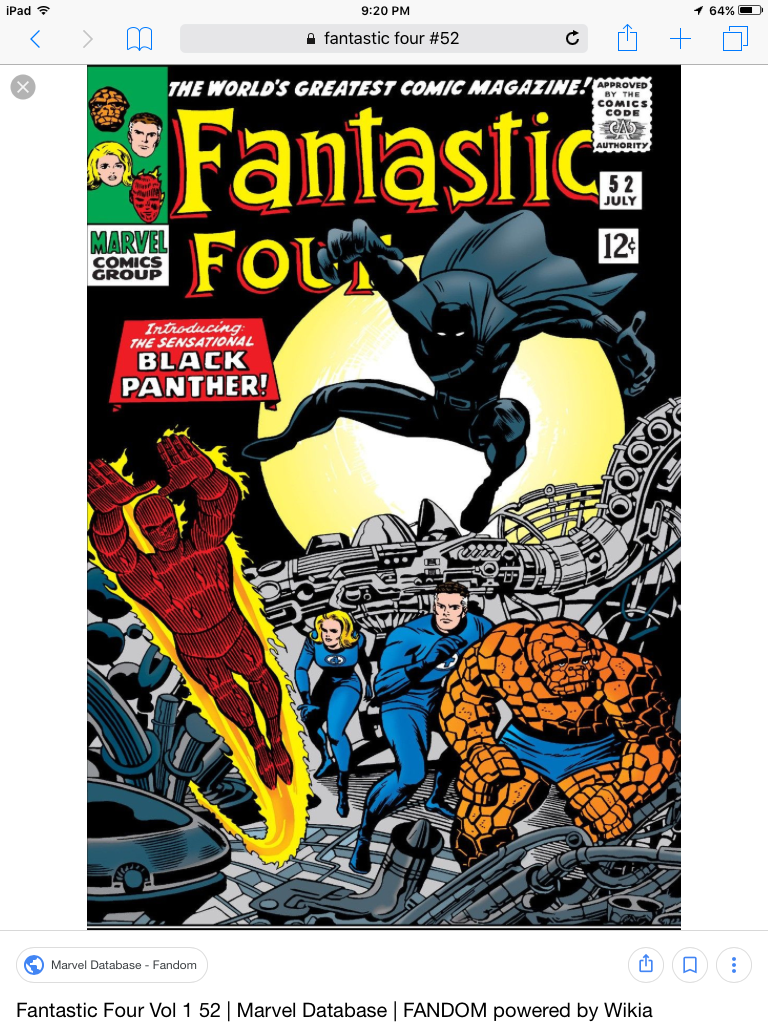
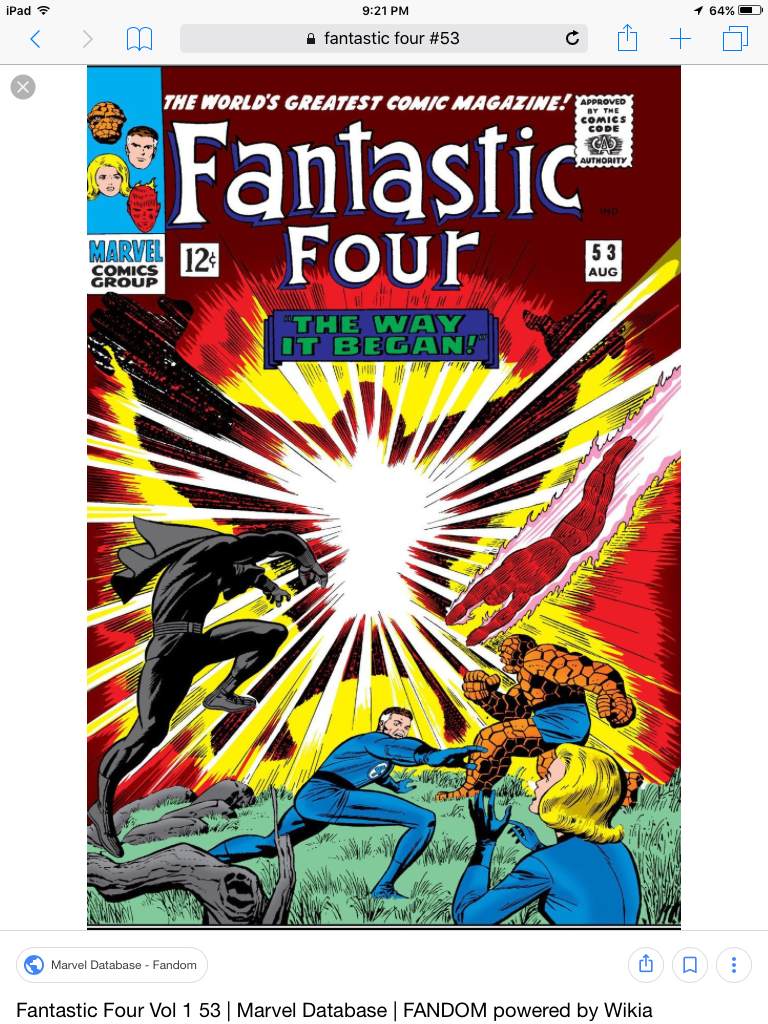
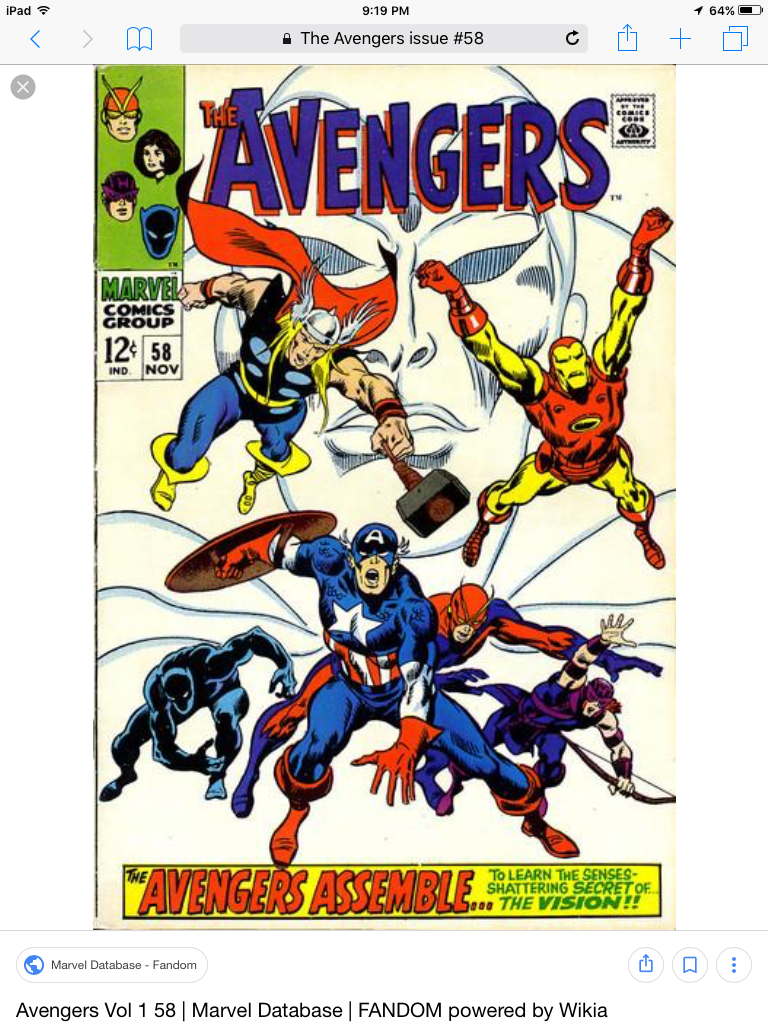
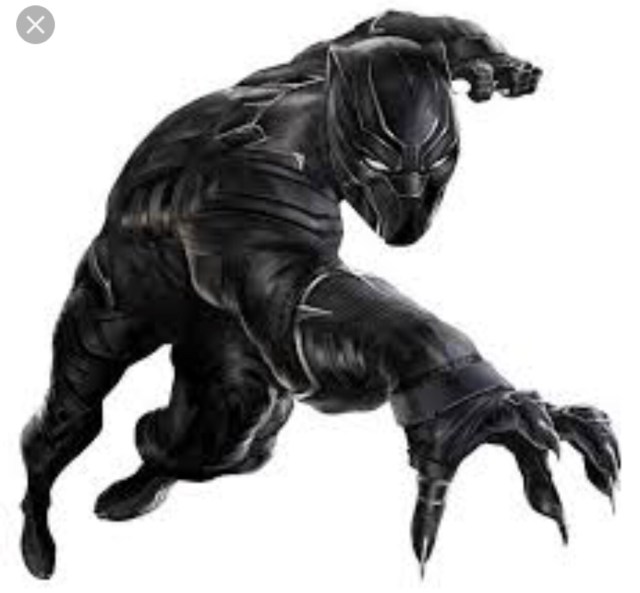
And I have been feeling Soupied by all the speculation about Quicksilver and Hawkeye and Captain Marvel and Spider-Man and Thor’s bathing anguish and Cap’s broken shield and what about The Vision and who that girl is by the lake and who the unnamed guest is at the Avengers party and whether there’s a Hulk/Black Widow relationship happening and whether Hulk is sent into space at the end and whether Black Panther shows up and…

It is exhausting.

And I probably just Soupied a few of you. Mea culpa, mea culpa.

Hard to resist,  I admit. Every one of those questions are intriguing and fun and fire me up, but also raise three concerns for me:

1) Are we building up expectations for this film to such a ridiculous degree that they cannot possibly be met, thereby ruining a potentially great MCU experience?

2) Are we actually right about some of these speculations and spoiling the movie for ourselves?

3) Are we creating so many questions to answer during the film that we will be checking off answers instead of immersing ourselves in the story/film experience?

These are basically variations on the same concern: are ruining Avengers: Age of Ultron?

I am not talking box office because I think it will do very well globally, hopefully exceeding the first film. 

I am talking about allowing the magic to happen, experiencing the spell, living the adventure. Will we be too mired in what we’ve read and discussed endlessly to sit back, munch the popcorn, and be amazed?

I have faith in Joss Whedon’s abilities as a spell caster, and am so predisposed to enjoy this film it would take a lot for me not to be thrilled and go multiple times. But I admit to being such a fan that I am concerned about tripping myself up. 

So I am going to avoid any further discussion or articles or speculation about this film for the remaining days.

Well, I am going to try.

Who am I kidding? Even this blog undermines my efforts, so I may be Soupifying myself with each tap of the keyboard here.

I can’t resist. Let me know what you think. Have we been Soupied? Is there such a thing as too much prefilm speculation?


</ Ryan is author of City of Woe, available on Kindle and in print. For more info, click here.<


Posted in America, comics, fiction, film, pop culture, super-heroes, Uncategorized | Tagged , , , , , , , , , , , , , , , , | Leave a comment

Schooling Myself: Podcasts as Independent Study

I have been getting progressively more serious about independent publishing as a career. I was a journalist a lifetime ago, then a teacher (still am) who wrote on the side (some comics, screenplays, short stories), and now that is flipping. I am becoming a writer who teaches.

And I am intent on establishing myself as that writer. I have published an award-winning novel, two short story collections, and a children’s book. I just finished rewrites on a YA novel, am collaborating on an action-adventure novel, and finishing rewrites on the sequel to the award-winner. 

The product line is forming.


The sales numbers are not there, but marketing is not yet my concern. The product line is forming.

Meanwhile, the hard truth is that writing isn’t enough. In this new age of ebooks and Create Space and online sales outlets, independent authors need to publish as a business, not as just a passionate artist. But, with two sons in college, I am not in a position to go back to school to learn the publishing business.

So I had to bring the school to me.

I am currently completely immersed in what I’ve begun thinking of as a  “graduate level independent study” in the form of podcasts and “textbooks”. I have found a wealth of writers and independent publishing podcasts that delve into the challenges and decisions authors must face as publishers. And I am learning this complex field like a grad student, an intern, and an acolyte all rolled into one.

Here are two of my favorite podcasts:


Joanna Penn’s “The Creative Penn” podcast is an informative, friendly, professional-sounding show that feels like an intimate grad class. The always friendly and engaging Ms. Penn either provides detailed information or interviews another independent publisher or connected service provider for a chipper session of facts and informed opinion. 

The Self-Publishing Podcast, on the other hand, shouldn’t work at all. it is like your rowdy friends took over the college radio station and decided to dis each other on air instead of playing records. If this was a class, the teachers would deserve detention.

But it works. 

Somehow, each week, the show’s trio of hosts, Sean Platt, Johnny B. Truant, and David Wright meander into serious discussions about their collective publishing journey, arguing among themselves about projects and procedures, ignoring or sometimes interviewing guests from the Indy pub world, but always, somehow, bringing out at least one essential truth per episode. 

Even the hard sell Kickstarter episodes (101-106, more or less), as tough as they were to get through, offered some enduring lessons about the always evolving Indy publishing industry. Fascinating.

And what grad course would complete without homework? In this case, I find myself assigning my own, in the form of books the podcasts have featured and their guests (and hosts) have written. These have extended my study, broadened my knowledge, and offer additional rewards each time I crack one open.


I am working my way through the collection above, listening to Joanna when I need some sanity, and am more than two-thirds of the way through the Self-Publishing Podcast’s almost 150 erratic but educational episodes.

My knowledge base continues to grow. 

Am I an expert yet? No way. But I am learning every time I hit play or pick up a book. 

If you are serious about your publishing dreams, I suggest you do the same.


</ Ryan is author of City of Woe, available on Kindle and in print. For more info, click here.<


Posted in digital publishing, ebook publishing, education, fiction, independent publishing, pop culture, self-publishing, teaching, Uncategorized, writing | Tagged , , , , , , , , , , , , , , , | Leave a comment

10 Steps for Organically Inserting a Character

I am heavily into production mode these days, rewriting no less than four new projects – CITY OF PAIN, the apparently long-awaited sequel to CITY OF SIN and CITY OF WOE, two YA novels, GENIUS HIGH and PERFECT, and a social parody novella A SIMPLE REBELLION. 

In addition, I recently finished co-publishing BLACKJACK:SHOOTERS with Blackjack creator Alex Simmons, and am currently cowriting BLACKJACK: SINS OF THE FATHER. 

Yes, I know, this is an ambitious slate which is made bigger because I hope to finish and move forward on all of this before summer. The goal is to travel this summer promoting all my publications. And things were going really well …

… until the beta readers.

On two of the projects beta readers pointed out character needs that posed interesting challenges to the writing. My rules for listening to beta readers are these: 

1) defend nothing

2) Listen with an open mind

3) STORY UBER ALLES! (story over all, so serve the story)

If, as a writer, these rules are embraced, the benefit is being able to see the project with fresh eyes. I always look forward to beta reader feedback because by that time I often cannot see the forest from the trees, meaning I either focus too much on proofreading instead of story, or I see characters and actions as they are in my mind rather than how they actually are on the page. Beta readers are fresh to the work, and if chosen well, they will often give surprisingly insightful views of what is actually there.

For this blog post, I want to focus on the feedback I received for my YA project, GENIUS HIGH, for which I learned there was a need for an additional character.

I find this an intriguing challenge. In essence, the question became how does a writer keep the organic feel of a work while inserting a new character?

Here are some suggestions for how to do it.

WHEN INSERTING A NEW CHARACTER:

1) First, review what you have compared with the beta feedback. In the case of GENIUS HIGH, the suggestion was that the lead protagonists needed someone close to them to go through the major problem of the story. I reread with an open mind, and, yes, they seemed protected from the main problem (Who me, overprotective of my characters? Never!).

2) Go for a walk, take a shower, do laundry, exercise, hang out with your “other” — do whatever you do while thinking about the story. Please note that this is a legitimate part of the writing process (yes, “laying around doing nothing” qualifies, as long as at least you subconscious is thinking about the story).

3) Open yourself to options with “What ifs?” In this case I asked myself, “What if there was another member of the core group? He or she? Brother? Sister? Girlfriend? Boyfriend? Or does it happen to one of the existing core members? Or should it happen to a second tier character?”

4) Keep notes. Index cards kick ass for doing so.

5) It may take days, but the possibilities will present themselves. What must be done with these possibilities is the writer must … play. Toy with various ideas, imagine, visualize, improv scenes in your head, just … play.

6) Allow the possibilities to “fight it out” in your imagination. Giving ideas space in your head may make it more challenging to interact with your Other (“What were you saying? I AM listening!”), but will help the correct choice rise above other possibilities.

7) Take that choice and let him/her hang out with your core characters, again, in your head. Ask your character questions (Who is s/he connected to? How are their back stories intertwined? How is s/he connected to other core characters? What are his/her loves/hates/desires/dreams as compared to the others?). Connect the new characters to the existing characters in as many ways as possible.

8) Torture your darlings. Remember the initial beta reader feedback, in this case, we as readers need someone close to the core characters to go through the major problem of the story. Push them to experience the pain/horror/danger of the central challenge of the novel as viscerally as possible. Make it real and alive in that world.

9) Take another pass through the entire novel, seeding the new character into every scene that is appropriate, adding new character-centric scenes as needed and tying together both edited scenes and brand new scenes so the style and feel is consistent throughout. Be aware new scenes may change the feel of other scenes, so a complete read-thru will help considerably.

10) If you are not emotionally drained by the time you finish inserting this character and taking all of your characters suffer through his/her arc, you aren’t finished. Go further.

11) (Bonus tip) If they are willing, have the beta readers read the rewritten draft. Repeat the process once more only if absolutely necessary.

I hope this helps fulfill the potential of your projects. I know I am thrilled with how this edit has turned out. I believe the additional effort makes the book much more inviting and enjoyable to readers.


Two of my favorite beta readers, Silvio and the goddess Tina. Also, special thanks to Steph Shaw and Cindi Ortiz.

</ Ryan is author of City of Woe, available on Kindle and in print. For more info, click here.<

Posted in digital publishing, ebook publishing, education, fiction, independent publishing, pop culture, self-publishing, Uncategorized, writing | Tagged , , , , , , , , , , , , | Leave a comment

The Walking Dead and the Sliding Scale of Responsibility

The Walking Dead is once again heading into dangerous, potentially controversial storytelling. And while this has been part of its appeal all along, the question looms as to whether the shows creators have learned from past mistakes.


Most recently, they had to weather considerable backlash after killing Beth (see above, and if that was a spoiler for you, you haven’t been watching and probably never will). This backlash has elements of an argument I have been making since a milestone mistake happened in the comic. More on that later.

I believe the reasons people reacted so strongly to Beth’s demise are 1) she was a favorite, and 2) her death wasn’t organic to the story line.

As for the first, this is part of the ride for this particular story. Favorites will die in an apocalypse. While it will stun, shock, infuriate and devastate us, that is part of why we watch even if we are unwilling to admit it. We want to share in characters’ lives, root for them, put ourselves in their shoes, etc., and if they die, that is part of the journey.

I can live with that, and believe The Walking Dead often does this well.

I find the other reason to be the stronger argument.

And this is worth discussing because of who is coming.

Negan.


I believe the strong negative reaction to Beth’s death is tied to Neggan, not as part of his plot line (though her death did make it impossible to stay in that allegedly safe haven) but more as part of the creative team’s responsibilities.

Here’s a theory I subscribe to regarding long-form writing: by offering their work for public consumption, the creator/creators enter into a sliding scale commitment with their audience. By that I mean creators are asking their audience to come along for the ride, to invest in the characters they create, and are offering entertainment and an emotional rollercoaster as a payment for that investment.

However, the responsibilities of the creative team grow in direct proportion to the amount invested by the audience. Should an audience invest just two-hours in a movie, the creative team can do almost anything, and have a basic responsibility to their audience to reward that basic monetary and time commitment from them. Same goes for a single novel or other finite storytelling experience. But should an audience invest a continuing amount of time on a creator or team of creators’ work, that reward must grow.

Beth’s death was seen by some as almost an accident, and that angered many. She deserved a better death. Both Beth and the audience who had invested so many seasons watching and rooting for her had earned a more dramatic and meaningful resolution to her storyline.

So what has this got to do with Negan?

Well, he’s coming, and he’s bringing both a baseball bat wrapped in barbed wire named Lucille and some seriously random homicidal tendencies with him. This was clearly demonstrated in issue 100 of the comic, wherein the creators committed what I believe has been, to date, their worst violation of the creator/audience, relationship; they killed off a major character with over-the-top, inorganic brutality that many saw as a stunt to make the 100th issue “special”. 

Instead of paying of the audience’s invested time and emotional connection to this popular, heroic character, they went for shock value. I suspect it lost them readers (at least one I know of), and cost them the trust of many more. The problem was that, after investing so much in this character’s journey, and investing time and emotions into that character for so long, as a hero, as a survivor, as one worthy of our attention, they ended that character without any of those elements he was known for continually demonstrating. 

The character’s death was unearned.

That plot point was inorganic.

It violated the sacred relationship between creator and audience.

And now Negan is coming to the TV version of this relationship.

Am I saying Negan or the creators shouldn’t be allowed to kill anyone? No. Am I saying some characters should be considered untouchable? No.

I am saying that creators are responsible for respecting their audience if they want that audience to keep watching, reading, listening, whatever. Should creators decide to kill characters, they must reflect on the length and depth of that character’s relationship with the audience. How long has s/he been around? How much has character and audience gone though together? The larger the answer is to those questions, the more that death must be earned. And yes, this is a sliding scale, and yes, it makes it that much more challenging for the creators as the show continues, but that is the deal creators make with their audience- stay with us and we will continue telling you a great story.

A magician cannot wow an audience for years, and then suddenly switch to basic card tricks, neither can storytellers.

Negan is coming, guys. Please don’t pull out that cheap deck of cards again. Because both sides of this relationship want to ….


</ Ryan is author of City of Woe, available on Kindle and Nook, and in print. For more info, click here.<

Posted in America, comics, digital publishing, ebook publishing, fiction, film, independent publishing, pop culture, self-publishing, super-heroes, Uncategorized, writing | Tagged , , , , , | 1 Comment

This Cold Won’t Stop Me

Maintaining my secret identity as an author requires a cover identity. Mine has its challenges. Sure, being a high school teacher requires writing lesson plans and grading mountains of essays and teaching great new minds, but there is another, darker side to high school…
Within that darkness dwells … Germs.
Teachers build up impressive immunities, but every year something mutates.
That’s what got me this year: the Mutant Monster Severe Cold Germ!
Knocks a victim on his/her back, nose flowing, lungs wheezing, head thick, muscles achey…
So how does a writer keep working through all that?
Two suggestions:
1) Sleep, because so much weird stuff is happening physically it often nudges the mind to wander into strange terrain. Always helpful.
2) Listen. When physically drained, writing podcasts are a perfect way keep ideas and craft study happening. The Creative Penn really does the job well.
Boom. There, I blogged. Pass me that box a tissues and pour some tea, will you?

Posted in digital publishing, ebook publishing, fiction, independent publishing, pop culture, self-publishing, teaching, writing | Tagged , , , , | Leave a comment

Charlie Hebdo and the Creator’s Work

Terrorists shot up the offices of French satirical newspaper Charlie Hebdo today, killing 12 and wounding five others. Allegedly the massacre was a direct result of the paper satirizing Mohammed. But Charlie Hebdo had been satirizing religions and governments and leaders and the world for over two decades. Only radicals had ever reacted in this way, first firebombing their offices, and then, today, murdering a good portion of the staff.

This is not the work of religious men, not the deeds of spiritual souls. This is the work of extremists. It is a mistake for these murderers to think any God is on their side in this. A brief look in any direction will tell you the creator of this world has a sense of humor and does not worry about what is said or drawn or printed.

We are a funny bunch, we humans. Infinitesimally, microcosmically tiny in relation to all of creation (or just the parts of the universe we know about) and some of us are still willing to kill those who do not think like they do.

Those efforts are doomed to failure. Humans aren’t built to think one way, we cannot function under a hive mind. It is our creator’s supreme gift; we are meant to mix, to blend, to grow together, and our creator is waiting for us to ascend to the level where we finally get this, finally understand the folly of the lines we draw and the sides we take, finally see how foolish we are for insisting on differences, for waging war over our own importance.
Humorists and satirists get this and do the brave work of trying to lead us beyond our artificial restrictions and prejudices.

Today some of those brave souls paid the ultimate price for their leadership.
But they did not die in vain. Charlie Hebdo or something like it will continue to challenge our self-image and self-importance and self-delusion. Charlie Hebdo or something like it will ask us to rise above our safety zones and get the joke–

–that we aren’t the chosen people, or God’s favorites, or the rightful rulers of anything. We’re just us, just humans, all of us, together. And the only real way for us to ascend is to forgive each other our trespasses and embrace our differences and laugh at how silly we can be.

Once we do, we’ll all be, at long last, truly closer to what we’re meant to be.
Charlie Hebdo knew that. Bless their souls for trying to teach the rest of us.

/home/wpcom/public_html/wp-content/blogs.dir/9f3/19513716/files/2015/01/img_1815-0.jpg

</ Ryan is author of City of Woe, available on Kindle and Nook, and in print. For more info, click here.<

Posted in America, comics, digital publishing, ebook publishing, education, fiction, film, husband, independent publishing, kids, politics, pop culture, writing | Tagged , | Leave a comment

Life Slam Dances With Itself: Ten Ways to Find The Time

From December 23 until January 4, I was on vacation, which translated to “free to write at all times during the day and night” and/or read about writing, listen to podcasts about writing, hang out with The Wife, watch The Wire marathon, see movies. Nirvana.
On January 5, I returned to work and my other obligations. I did a bit of writing-related emails over morning tea, thought about the novel during the shower and dressing and driving to work.
And then it stopped. Work was here. Lesson plans to polish. Kids to greet. Classes to teach. And all of this continues to be great. Before becoming a teacher, I spent years as a reporter writing about dead kids. I have never forgotten how that felt. Every day I walk into a school that is crackling full of the living, breathing live energy that kids exude is a blessing for me. They do not even know how they absolutely bring any room to life, and I am so grateful for my time with them.
We But it isn’t writing. The reality is that work takes energy I was applying to writing during that vacation (stay-cation, really, I barely left the house); this is a simple fact of life with which we all must all deal.
So, how do we get writing in during a busy work day? I have a few ideas.
1) Recognize the worth of the day job. It pays the bills, and finances your writing life. Be grateful and committed when there. By doing this you free your energy away from negativity and toward productivity.
2) Find your rituals. There are times in the day when you can write. For me, morning tea is a good time to write something short. I am writing this during morning tea (yeah, Barry’s Irish!). I find I can keep up with my FB Author Page and my blog at this time. Find a short space of time just for you and the writing.
3) There are other periods of time wherein you can write, find them and use them, too.. For me, I find I have some time after work and before dinner, and after dinner but before meetings or just collapsing. I took advantage of them yesterday and got two key chunks of the novel rewritten. One was the Forward, which always worries me (“Who did I forgot to thank?”), so it was a relief to get another draft done (I will revisit), and I went through Chapter One twice. This is the fourth draft, so most should be polish, with an option to rewrite should a problem reveal itself. But when it was time to stop, I felt I’d moved the work forward. That’s all any of us can do.
4) But I’m tiiiiiiiiirrrrrred. Yes, we all are. Take a power nap. Five minutes on the couch and then up and at’em, whether it be cold water splashed in the face, or push ups or, for me whatever song I am obsessed with that day (right now it is “Kansas City” sung by Marcus Mumford on the New Basement Tapes CD). Play it once, sing your ass off, then turn to the writing. Whatever works.
5) But I missed a day…. Forget what happened yesterday, that’s gone. Find some time to write this day (“They’ll come a day when pens and keyboards fail and we do not write, but it is not this day!”). Live in the moment when it comes to the day’s writing.
6) The victory is sitting down and powering on. Once you get into the first paragraph, the time is there, the writing is happening, even if it is rewriting. Victory.
7) Trick yourself into productivity. Many writers use the trick of either stopping in the middle of a scene so you can pick up there the next day, or going back to the last chapter from the day before and rereading, rewriting that, then going forward with new writing. If that works for you, Victory!
8) Use a to Do List or a Story Map. Other writers use a To-Do list or Writing Map as a guide for writing. If that works for you, keep it near your writing area and just sit down, check what’s next, and leap in. Again, whatever works.
9) Put a carrot on that stick. Sometimes I need a little more to get me to the table. Chips Ahoy works well. A good cuppa tea works better. A combination of both works best. Tonight, I will get some writing in by telling myself that doing so allows me to enjoy a show I want to watch (never reward yourself before you write– you’ll wind up bloated from cookies after watching seven hours of junk TV). Do whatever gets you to the writing.
10) My personal favorite – index cards, smart phones, etc. I carry something to write down ideas all the time. Most of the time it is index cards because I can manipulate them, re-order scene ideas to work for me, etc. but the notepad on the Smartphone has proven useful because I can write or dictate ideas and email them to myself, then cut and paste into whatever I am working on.
Remember, you will find some of these ideas work and some don’t, for you. That’s the key. Find what works for you and do that. Don’t give up, don’t get down on yourself, just write something every day.

IMG_0828.JPG

</ Ryan is author of City of Woe, available on Kindle and Nook, and in print. For more info, click here.<

Posted in digital publishing, ebook publishing, fiction, independent publishing, pop culture, self-publishing, teaching, Uncategorized, writing | Tagged , , , , , , | Leave a comment

Favorite Joke, ever

I participated in the last of the holiday get-togethers this evening. Talk about holding on. And I was reminded of a great moment in my life. The moment involved my all-time favorite joke.
What’s the joke? Not yet.
The reason the moment was great was because it involved one of my beloved nieces, this one is studying to be a doctor because she’s got it like that, she’s got study cool and textbook savvy and a fancy brain. Better still, she really likes my all-time favorite joke.
Even better than that, she liked when I first told her, wayyyyy back when she was a darling little girl and not at all doctorish.
How do I know she really liked my all-time favorite joke? Because she brought it up tonight, all these years later. And she’s still amused.
Do you know why she likes it? No? Cool, because neither does she.
And you know what? I don’t really know why I love it, either. To quote my beloved niece, “It just struck me as so funny.”
Me too, kid. Um, Doc.
What’s my all-time favorite joke?
It’s the one I tell my classes, announcing on a Monday that I am going to tell it that Friday, and building it up to ridiculous heights each day through the week until there is no way the joke can withstand its own introduction.
And then I tell it, my all-time favorite joke, right at the end of class. I tell it, and leave most of them stunned.
But there is always that one student who laughs. And we connect, and that’s all a joke is supposed to do, make a connection between teller and audience, in an amusing way.
That connection is the whole show, folks. It is why we write or paint or sing or act or sculpt or make films or tell jokes – to connect.
It happened with me and my beloved niece, and with some students through the years, and now, maybe, with me and you.
So, why did the monkey fall out of the tree?
‘Cause he’s dead.

</ Ryan is author of City of Woe, available on Kindle and Nook, and in print. For more info, click here.<

IMG_1370.JPG

Posted in America, comics, digital publishing, ebook publishing, education, fiction, film, independent publishing, kids, love, Music, pop culture, teenagers, Uncategorized, writing | Tagged , , , , , , , | 2 Comments

Respecting People is Key to Creating Worthwhile Characters

Many authors will say that among their best writing experiences are the times when characters seem to take over and write themselves. Some consider this channeling, that is, serving a muse or some higher authority’s desire for expression.
Maybe so, but maybe an equally powerful explanation is that these moments are the result of an author really knowing her or his characters. The truth is, the better an author knows the material, the easier it will be to write with authority.
One element of the writing process that must not be overlooked if we want these moments to occur is prewriting. Non-writers often think that when a writer isn’t at the keyboard s/he is goofing off. Not true. Dickens walked ten to twenty miles a day, looking at London and “seeing” his setting, his characters, his stories with each step. I once attended a talk by Joyce a Carol Oates wherein she spoke about her process of “running” her novels. She explained that she never wrote a word of any project until she could begin her run, and “watch” her story at the same time. If she came upon a problematic point, she’d ponder it until resolved, then “rewatch” the next day. Oates said that once she could “watch the story from beginning to end, then she could begin writing or “transcribing” it into a novel.
This is what I mean by knowing your characters. The more we know about them, the better we can write about them with facility.
So, how do we get to know our characters? What goes into building that skill set? Mostly, reading, listening, and experiencing other people, to be honest. And nothing is off limits. Read everything. Watch everything. Listen. Walk around the world and let it in.
My methods of getting to know a story and characters have evolved over the years, combining all of the above with elements of what I have studied. There is still a bit of Sydney Field’s plot paradigm in my process, a dose of Robert McKee’s STORY advice, a foundation of Joseph Campbell and Christopher Vogler, advice from Stephen King’s ON WRITING and Elmore Leonard’s TEN RULES FOR WRITING, and lots more.
I’ve used much of what I learned in workshops including Writer’s Bootcamp, ThinkTank, and wisdom from the many authors who appeared at the South Hampton Writer’s Conference, ThrillerFest, as well as one of the first BuffyFest’s studying the works of a Joss Whedon and all the publications that have come out of that ongoing celebration. I’ve gobbled up publications (Writer’s Digest among them) and a diverse collection of podcasts (I learn as much from Kevin Smith’s podcasts and I do from those focusing more exclusively on writing). Add to that nonfiction work on the area I am writing about, from police work to the supernatural to comedy, and it is like undertaking Independent study on a graduate level.
To all this, I have added iTunes.
These days, I create playlists for different characters or the novel in general, with songs chosen that reflecting the journey or journeys being developed. Then I walk and listen, do chores and listen, chill and listen. There is no to-do list, I just listen and think about where this character is on his or her journey. Sometimes the Playlist has to change as a song hits my ear wrong or interferes with the character flow established. We must always do whatever serves the character and the story.
By the time I get to the writing table (I once was gifted a desk from my brother that was slightly smaller than an aircraft carrier, and I got used to all that space and once that desk died of old age, I began to use a large table –Whatever works), I know those characters so well, and the story points are so clear, that the work flows fairly easily.
Recently, I got to write someone else’s character, Arron “Blackjack” Day, an African-American soldier of fortune set in the 1930s, created by Alex Simmons. Here I couldn’t create a character out of my imagination, I had to adapt my imagination to Blackjack’s well-established history. Again repetition and immersion bred facility, as I reread Alex’s previous works about Arron, my own 12-part Blackjack comic strip, and revisited an earlier short story I had been allowed to write featuring Blackjack and another guy that I had created for the world of Blackjack.
Just like with my own creations, spending time with Blackjack got the ideas flowing, the writing going, and I found that Blackjack has a very clear say in what he would and wouldn’t do, say, and be.
It was the prewriting time that made the difference in all of these projects. If only we would prewrite in real life.
Right now, American culture is often in conflict because people aren’t listening to each other, respecting the differences that make us such a fascinating whole, embracing that we are all on variations of the same journey. What we are failing to do is give each other the time and attention and respect we each deserve.
Like above, so below.
If writers want to have any chance of creating work worthy of people’s time and attention, we should be watching and listening and trying our best to grow our minds to be able to reflect what we learn and think and feel in our lives in the work. But to do that, we need to respect those who are real, and then those who represent them in story.
Give your characters the time they deserve, spend time listening and being open to their possibilities, and the writing will come through dynamically.
So go hang out with others, real and fictional, and give them time and an open mind. We’ll all be better off for your efforts.

</ Ryan is author of City of Woe, available on Kindle and Nook, and in print. For more info, click here.<

IMG_1370.JPG

Posted in America, comics, digital publishing, ebook publishing, fiction, film, independent publishing, pop culture, self-publishing, Uncategorized, writing | Tagged , , , , , , , | Leave a comment

More Writing in 2015

Things have been quiet on this blog for a long while, but my computer has been busy. Here’s what I have been doing:
I have an anthology coming out early next week, BLACKJACK: SHOOTERS, in which I write a few stories about a somewhat legendary character known as Blackjack, an international soldier of fortune in the 1930’s. The stories in BLACKJACK: SHOOTERS reflect the social problems of those times, though the work is primarily action and thrills and adventure. I believe the underlying themes also comment on what is happening in our society today, be it gun violence in Walmart, racial tensions from Ferguson, Missouri to New York City, or how we seem to do everything we can not to listen to each other or treat each other as human beings. We hope BLACKJACK: SHOOTERS excites and entertains first, but maybe gets us a small step closer to each other as well.
Next on the horizon is CITY OF PAIN, the second novel in a The City Series which will be released in early 2015, no later than March. This slightly supernatural series of crime thrillers has been well received so far. The prologue to the trilogy of novels, a short story collection entitled CITY OF SIN, has enjoyed a warm reception, and the first novel CITY OF WOE, has 27 great reviews on Amazon.com and earned me the Independent Book Publishers Association’s Benjamin Franklin Gold Award for “Best New a Voice in Fiction”. Let’s hope people like CITY OF PAIN at least as much. Beta readers have said they like it even better than the earlier works, so I am encouraged.
Further into the year I will be publishing more Blackjack and a YA novel as well. More on those as they grow closer to publication.
In addition to writing, there is one, possibly two films coming out this year that I act, co-produce, write, or direct. More on those as the year progresses as well.
So why am I writing in the blog again? Because I want to stay in touch, on writing topics, and life topics, and with you. I know there aren’t many who read this blog right now, but I am very grateful to those who do, and I feel a need to keep up my end of the bargain.
Here’s to 2015. It’s gonna be a blast….

strong>Christopher Ryan is author of City of Woe, available on Kindle and Nook, and in print. For more info, click here.</em

20131227-104807.jpg

IMG_1831-1.JPG

IMG_1921-0.JPG

Posted in America, comics, digital publishing, ebook publishing, fiction, film, independent publishing, pop culture, self-publishing, super-heroes, Uncategorized, writing | Tagged , , , , , , , , , , , , | Leave a comment